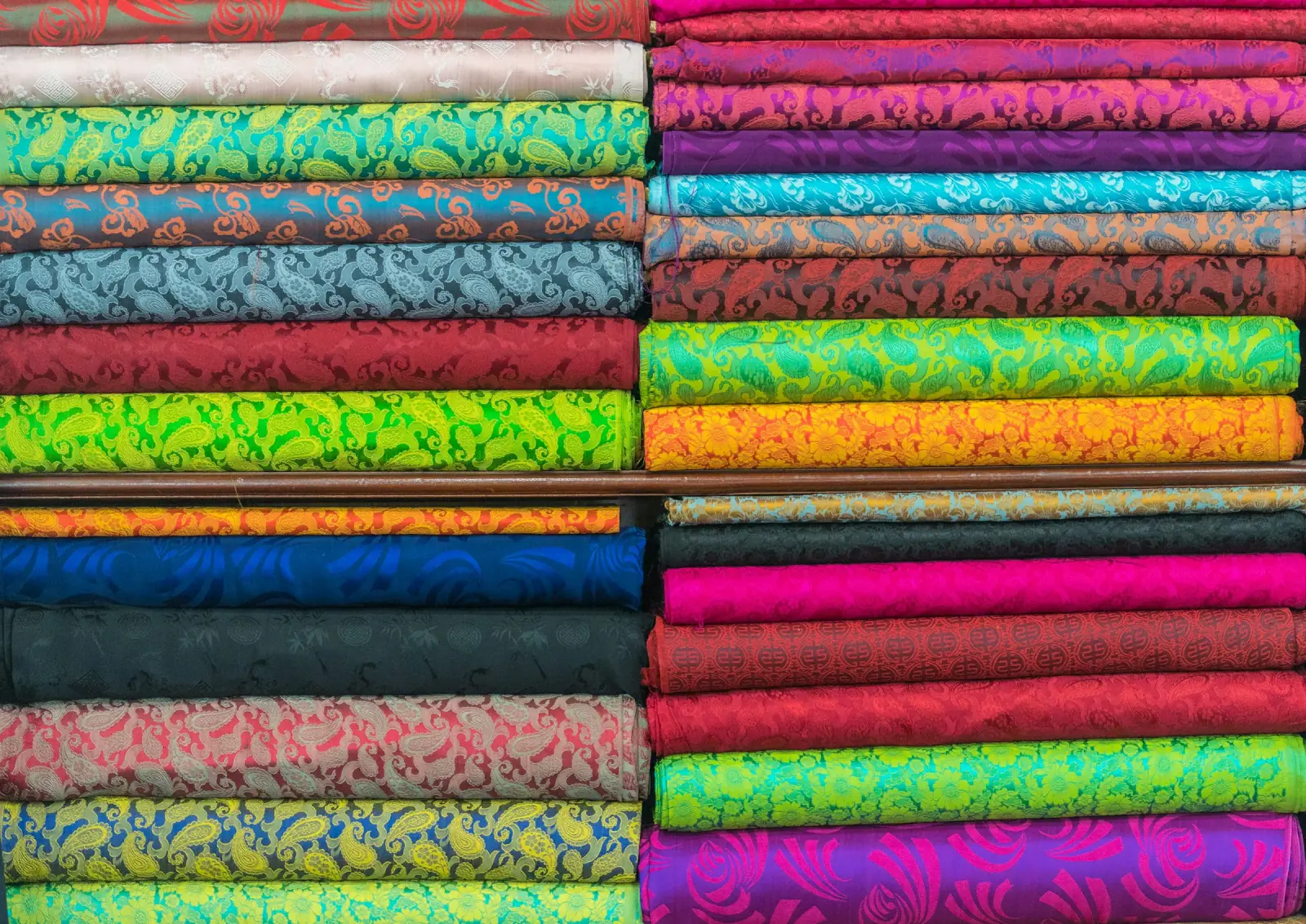
Floral cotton fabric: a guide for fabric store owners
Florals are the biggest print family in Indian cotton retail and the easiest one to overbuy. Here is how to choose the right prints, bases and scales, and how to keep a wall of flowers from turning into a wall of dead stock.
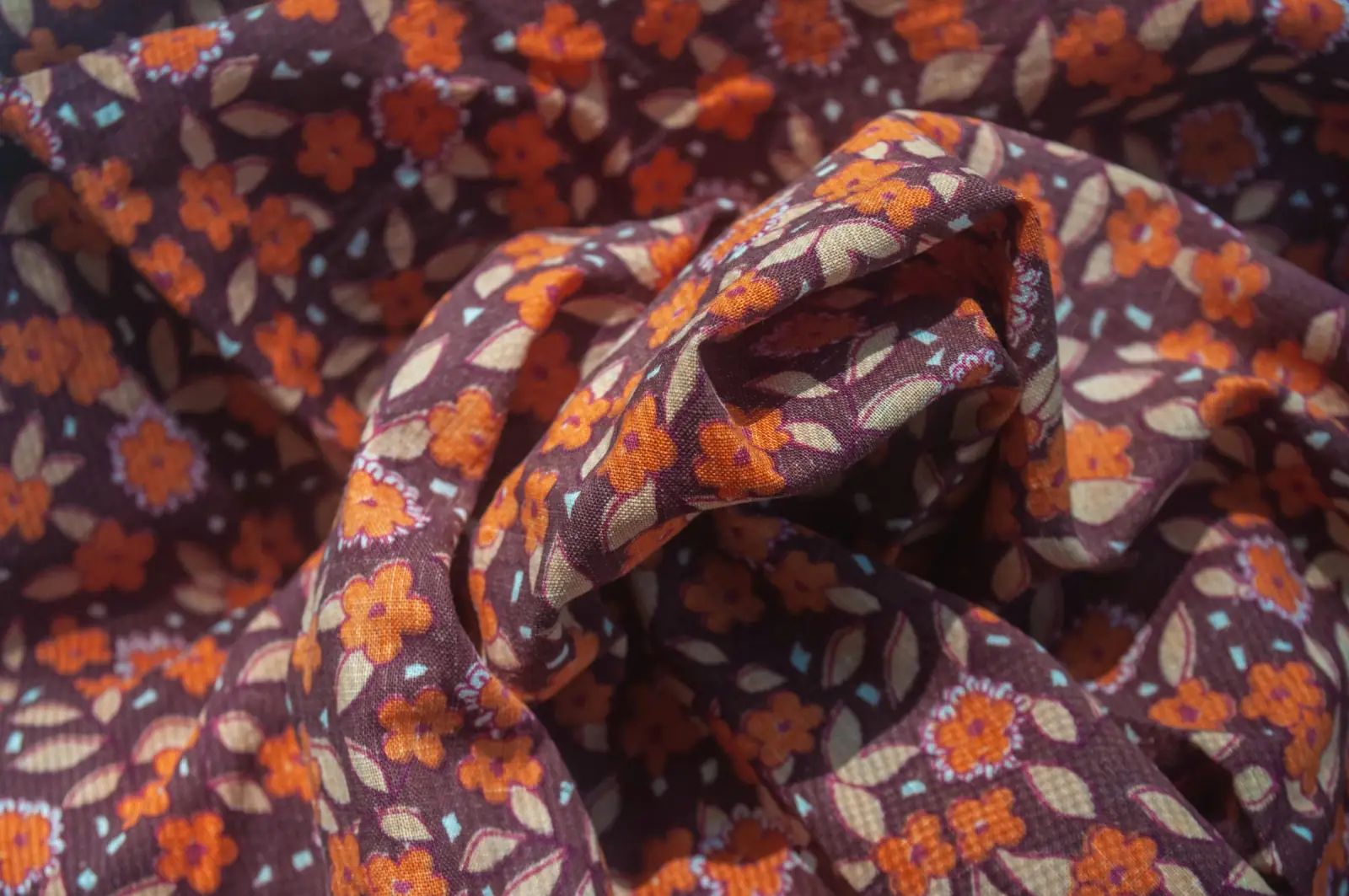
Photo: Ksenia Pixelesse on Unsplash
Walk into almost any fabric shop in India between March and August and count the flowers. Tiny buti on cambric, big blowsy roses on poplin, hand-blocked marigolds from Sanganer, digital peonies on voile. Florals are the single largest print family in cotton retail, and for good reason: they suit kurtas, children’s frocks, summer dresses, cushion covers and curtains alike, and customers of every age buy them.
They are also the category most likely to leave a shop with forty designs nobody wants by October. Floral prints are fashion. A colourway that flies off the shelf in April can be unsellable in August, and the difference between a profitable floral wall and an expensive one is almost entirely in the buying and the record-keeping.
This guide is for store owners who sell floral cotton fabric or want to do it better. We cover the kinds of floral prints and cotton bases worth knowing, how to judge a print before you buy it, how to size a floral range, and how to track dozens of designs so you know which ones are earning their shelf space.
Florals on cotton have an Indian history
It is worth knowing, and worth telling customers, that printed floral cotton is one of India’s great exports. The English word chintz comes from the Hindi chheent, meaning spotted or variegated, and it described the painted and printed cottons from the Coromandel coast and Gujarat that Europe went wild for in the 1600s and 1700s. They were so popular that both England and France restricted or banned imports for a time to protect their own weavers.
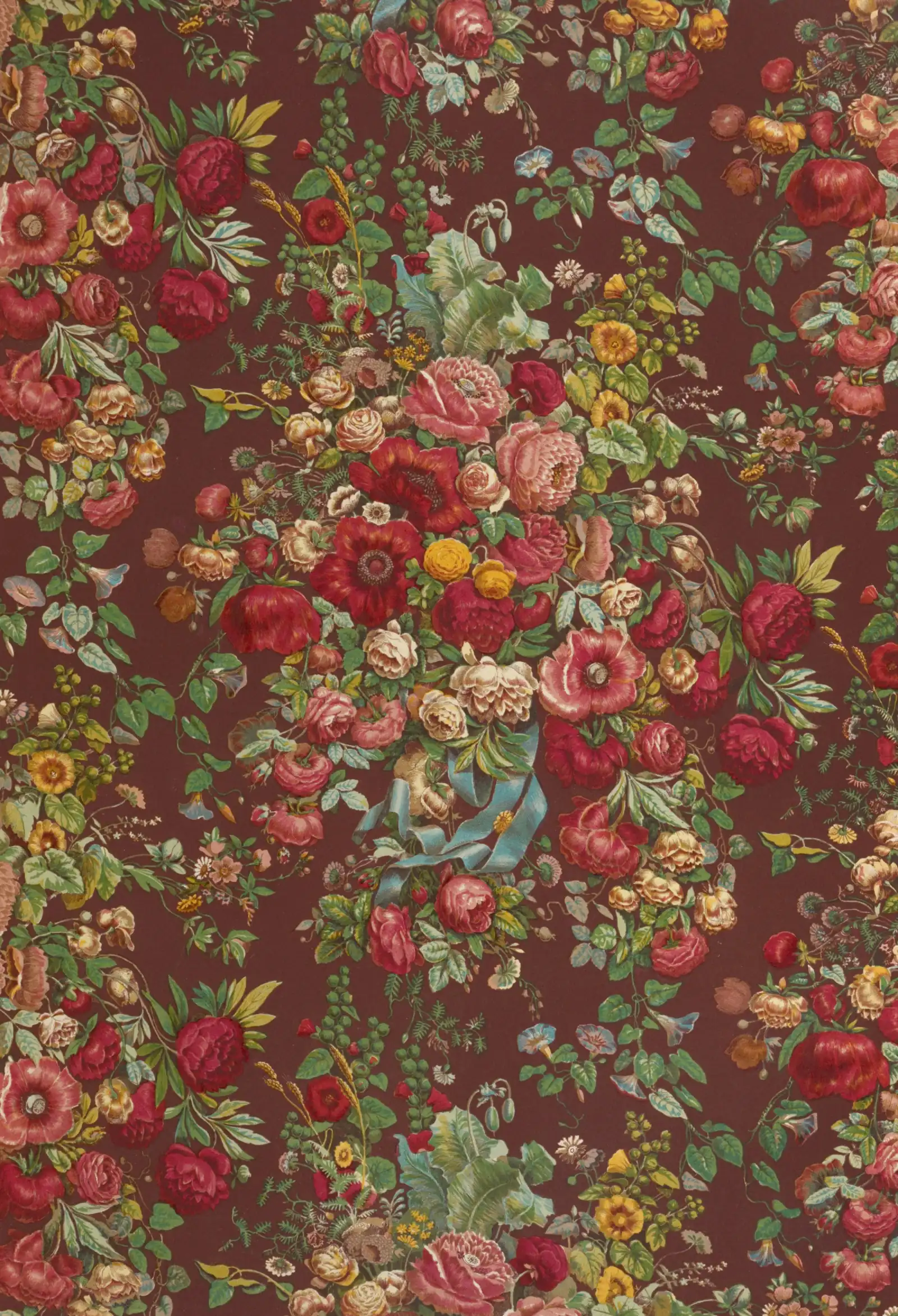
That tradition lives on in hand block prints from Sanganer and Bagru, in kalamkari florals from Andhra Pradesh, and in screen and digital prints from Surat, Ahmedabad and Jaipur. Our guide to India’s textile hubs covers which cluster makes what. A customer who knows her floral kurta fabric has a three-hundred-year story behind it values it differently. So does the salesman who can tell it.
The floral prints your customers actually ask for
Customers rarely use trade terms, but they know exactly what they want when they see it. Knowing the families helps you stock a balanced wall and helps your staff find the right bolt faster.
| Print family | What it looks like | Sells best for |
|---|---|---|
| Buti and ditsy florals | Small, scattered flowers, often one or two colours | Kurtas, shirts, children’s wear, quilting |
| Jaal | Flowers linked in an all-over trellis or net | Suits, dress material, bedsheets |
| Large-scale florals | Big blooms, lots of background showing | Dresses, skirts, curtains, cushion covers |
| Border florals | A printed floral border along one selvedge | Kurtas, dupattas, sarees, frocks |
| Hand block florals | Slightly irregular repeats, earthy dyes | Premium kurtas, home linen |
| Digital florals | Photographic detail, many colours, soft shading | Fashion dresses, co-ord sets |
Scale matters more than colour
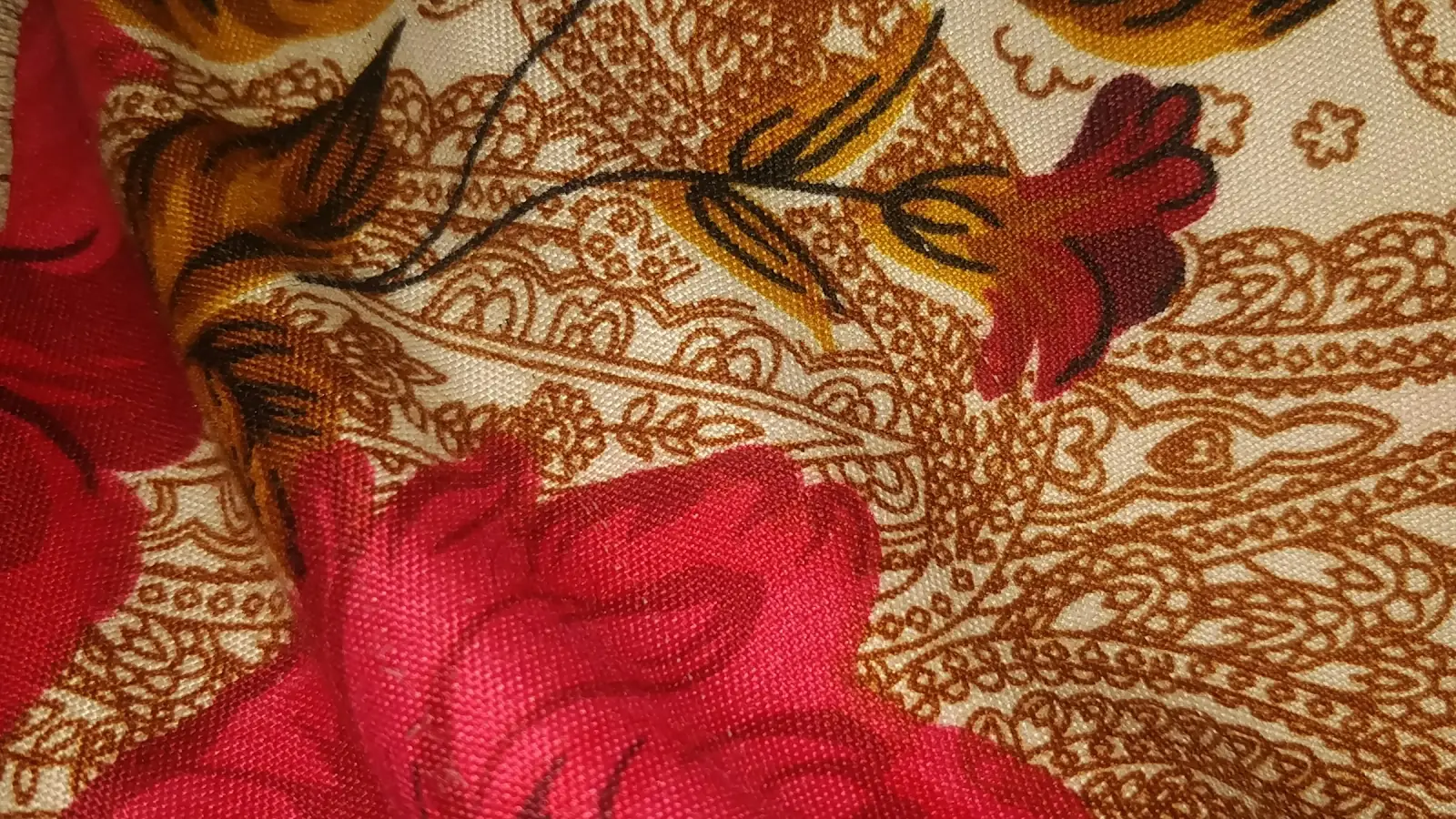
The most common floral mistake at the counter is scale. A beautiful large-scale print looks wonderful on a 45-inch bolt and ridiculous on a size-4 frock, where the pattern pieces cut the flowers in half. A tiny buti that looks elegant on a kurta disappears on a curtain from across the room. Ask what the customer is making before you show prints, and group the wall by scale as well as colour so staff can point to the right section.
Choosing the cotton base under the flowers
The same print on two different bases is two different products at two different prices. Customers often judge by the print and then complain about the fabric, so the base deserves as much attention in your buying as the design.
| Base | Feel | Typical use |
|---|---|---|
| Cambric | Light, smooth, slightly crisp | Kurtas, shirts, children’s clothes |
| Poplin | Smooth, a little heavier, holds shape | Dresses, shirts, skirts |
| Voile | Very light and sheer | Summer tops, dupattas, layers |
| Mulmul | Soft, fine and airy | Kurtas, nightwear, summer dresses |
| Slub or flex cotton | Textured, casual | Kurtas, co-ord sets |
| Cotton canvas or duck | Heavy and firm | Cushions, bags, upholstery |
If a customer is torn between a floral voile and a floral cambric, the real question is whether she wants to wear a lining. Voile florals usually need one; cambric usually doesn’t. For a closer look at the lightest of these bases, see Muslin fabric by the yard.
How to judge a floral print before you buy it
Wholesalers show you the best-lit corner of a catalogue. A few quick checks at the supplier’s counter save a lot of grief on your own.
- Rub test for colour. Rub a white handkerchief firmly on the print, dry and then slightly damp. Colour on the cloth means colour on the customer’s other clothes. Deep reds and maroons are the usual offenders.
- Check the registration. On multi-colour screen prints, each colour should sit exactly inside its outline. A misaligned print looks blurred up close, and customers do look up close.
- Look at the back. A print that barely shows through is fine for most uses; a print that has soaked right through gives a softer, more even look for dupattas and voiles.
- Check the direction. Some florals have every stem pointing the same way. These one-way prints need more fabric, because every pattern piece must be cut in the same direction. Tell customers, and price the extra length into kits.
- Wash a sample. Cut a small piece, wash it hot, and check for shrinkage and fading before committing to a deep order of a new supplier’s print.
Sizing a floral range without drowning in designs
The temptation with florals is to buy one of everything. The catalogue is beautiful, the price per metre is low, and every design looks like it might be the one. The result is a wall of forty prints with eight metres each, of which ten sell out in a fortnight and thirty sit until the monsoon.
Wide and shallow first, then deep on the winners
A more reliable pattern is to open the season wide and shallow: many designs, a short length of each. Watch the first three or four weeks, then reorder deep on the prints that prove themselves. Surat and Jaipur designs move fast, and the same print may not exist a month later, so place the reorder early rather than waiting for the last metre to go.
Kapda Stock’s reorder suggestions help once a design has a sales history. They use the last 30 days of sales: if a floral cambric sold 45 metres in 30 days, that is 1.5 a day, and with a 7-day lead time and 4 metres on hand the suggestion is 7 × 1.5 − 4 = 6.5, rounded up to 7 metres. For a supplier who takes three weeks, lengthen the lead time on the Reorder report and the suggestion grows to match.
Balance the wall by colour family
A simple way to check a floral range is to sort it by background colour: whites and creams, pastels, brights, darks. Most shops find they are heavy in one family and thin in another, usually because the buyer has a favourite. Customers shop by background first, so a gap there is a lost sale even if the wall looks full.
Setting up floral designs so you can track them
Florals only become manageable when every design is its own item. “Floral cambric” as one product tells you nothing; “floral cambric, rose jaal, navy” tells you exactly which print is selling and which is not.
Keep the supplier’s design number
Printers and wholesalers identify designs by number. Put that number in your SKU, so reordering a winner is a phone call rather than a hunt through photos.
| Design | SKU | Unit |
|---|---|---|
| Cambric, rose jaal, navy, supplier design 2041 | FLR-CAM-2041-NAVY | MTR |
| Cambric, same design, white | FLR-CAM-2041-WHT | MTR |
| Voile, large peony, blush | FLR-VOI-0876-BLUSH | MTR |
| Hand block, marigold buti, ochre | FLR-BLK-MRG-OCHRE | MTR |
| Floral kurta set, pre-cut 2.5 m | FLR-SET-2041-NAVY | SET |
In Kapda Stock, add metre-sold prints from the + Add product form with the MTR unit. Every design gets its own barcode automatically. The unit, HSN code and GST rate can’t be changed after saving, so check them first; woven cotton prints usually start from heading 5208, but confirm the right code and rate with your CA. Products walks through each field, and Categories lets you group florals separately from plain cottons and rayons.
Use a supplier bill to add a whole catalogue at once
New florals tend to arrive twenty designs at a time. Typing each one in is tedious. With Scan bill, you photograph the supplier’s printed invoice, check the lines in a grid, and choose Create as new product for each new design. One confirmation receives the stock, sets the cost and credits the supplier. It reads printed English bills; handwritten ones still need typing, and quantities must be whole numbers.
Label every bolt
Floral bolts look alike from the side. A barcode label on each bolt end shows the product name, SKU, price per metre and a QR code that scans straight into the bill, so a new salesman never rings up the navy rose at the white rose price.
Florals for curtains and cushions need extra care
Home-décor customers buying floral cotton for curtains face a problem dress customers rarely do: pattern matching. Every curtain panel has to start at the same point in the print so the flowers line up across the window. That usually means buying roughly one extra pattern repeat for every panel after the first. Measure the repeat on the bolt, tell the customer, and add it to the length before you cut. A customer who comes back short on the last panel of a living room often finds the design gone.
Reading which florals earn their place
Once each design is a separate item, the reports start answering the questions a floral buyer actually has.
- Which designs carry the range? ABC analysis ranks products by revenue. Typically a handful of prints bring in most of the money — those are the ones never to run out of.
- Are florals making money or just making noise? Category performance shows revenue, cost and margin for each category, so you can compare florals with plain cottons and see whether discounting is eating the margin.
- Which designs have stopped selling? The dead-stock table on the Reports hub lists items with stock and no sale in 90 days, the money locked up, and a suggested clearance discount of 20%, 30% or 40% depending on how long they have sat.
Ninety days is a long time for a fashion print. Many floral buyers act sooner, moving a design that has not sold in a month to a better spot on the wall, pairing it with a matching plain, or cutting it into a pre-cut kurta set before discounting. The dead-stock list is the backstop, not the first warning.
Pricing floral cotton so the wall makes sense
Customers comparing two florals side by side want to understand why one costs twice the other. If the answer is “that’s what the supplier charged,” the cheaper one wins every time. Price by what the customer can see and feel: the base fabric and the printing method.
| Method | How it is made | What it means for price |
|---|---|---|
| Rotary or flat screen | One screen per colour, printed at volume | Lowest cost per metre on long runs; the everyday floral |
| Digital | Printed directly from a file, any number of colours | Costs more per metre but allows small runs and photographic detail |
| Hand block | Carved wooden blocks stamped by hand | Highest cost; slight irregularities are part of the value |
Many shops find it helps to set a small number of price bands, for example everyday screen-printed cambric, premium digital voile and hand block, and to fit every new floral into one of them. Customers learn the bands quickly, salesmen stop negotiating from scratch on every bolt, and your margin stays consistent. Because each design is its own item, the purchase cost on every product updates as new lots arrive, so you can see when a supplier’s price rise has pushed a design out of its band.
Hand block prints deserve a word at the counter. Customers sometimes see the small variations between repeats as faults. Explain that they are the sign of a hand-printed fabric, and the price makes sense.
Selling florals at the counter
Florals sell on imagination. The customer has to picture the finished kurta, frock or cushion, and a few simple habits make that easier:
- Pair prints with plains. A floral kurta fabric sells faster next to the plain it would be piped or paired with. Suggesting the matching plain raises the bill without any discount.
- Offer pre-cut sets. A floral kurta length with a matching plain for the bottom, sold as a set, saves the customer the hardest decision.
- Keep a sample made up. One stitched cushion or frock in a top-selling print shows scale better than any bolt.
- Use daylight. Florals on white or pale grounds can look very different under warm shop lights. Let customers check near a window.
- Reward regulars. Customers who buy florals every season respond well to loyalty points; a rate set in Invoicing settings earns points on every bill at ₹1 a point.
When a floral design is almost gone, the last metre or two on a roll becomes a remnant. Kapda Stock flags a started roll as a remnant once it is down to 2 units or 10% of its original length, whichever is larger, and floral remnants sell well to quilters and parents making children’s clothes. How to track rolls of fabric covers that side in detail.
Planning floral stock around the year
Floral cotton has a clear rhythm in most of India. It starts moving with the first warm weeks around Holi, peaks through summer, stays steady into the monsoon, and slows as autumn colours take over. Wedding and festival seasons bring their own demand for richer florals on heavier bases.
- January–February: review last summer’s floral sales on the Reports hub with a custom date range, and export the top products to plan from.
- February–March: place the first, wide-and-shallow order. Record it as a purchase order with an expected date.
- March–April: receive, label and display. Set a minimum stock level for each design so the 9:00 AM low-stock alert watches it.
- April–June: reorder the winners early and deep. Drop the designs that haven’t moved.
- July–August: clear the tail with a time-limited coupon code, and switch the wall to autumn colours. Fall fabric planning covers the next season.
A wall of flowers that pays for itself
Floral cotton will always involve taste and a little luck. What turns it from a gamble into a dependable category is simple: judge each print before you buy it, open the season wide and shallow, give every design its own record, and let the sales tell you which to reorder and which to clear.
Kapda Stock handles the record-keeping behind that: one item per design with its own barcode, supplier bills scanned straight into stock, reorder suggestions, dead-stock lists and category reports. If florals are one of several print families on your shelves, our guide to organising pattern fabric takes the same approach across the whole range. See all the features, or set up your shop and add your first floral design today.
Frequently asked questions
What is floral cotton fabric used for?
Floral cotton is used for kurtas, suits and dress material, summer dresses and skirts, children’s clothing, shirts, nightwear, dupattas, cushion covers, curtains, bedsheets and quilting. The best choice of print scale and cotton base depends on what the customer is making.
What is the difference between cambric, poplin and voile floral prints?
They are different cotton bases. Cambric is light and smooth, good for kurtas and children’s wear. Poplin is slightly heavier and holds its shape, suiting dresses and shirts. Voile is very light and sheer, so it is lovely for summer tops and dupattas but often needs a lining.
How can I tell if a floral print will bleed?
Rub a white cloth firmly over the print, first dry and then slightly damp. If colour transfers, it is likely to bleed in the wash. Washing a small sample in hot water before buying a large quantity is the surest check, especially for deep reds and maroons.
Where does the word chintz come from?
Chintz comes from the Hindi word chheent, meaning spotted or variegated. It referred to the painted and printed cotton textiles from India that became hugely popular in Europe in the 17th and 18th centuries.
How should a fabric store track many floral designs?
Set up each design and colourway as its own item, with the supplier’s design number in the SKU so you can reorder it. Then use sales reports to see which designs sell and which have stalled. In Kapda Stock every design gets its own barcode, and Scan bill can add a whole supplier invoice of new designs at once.
Why do hand block floral prints cost more than screen prints?
Hand block printing is done by hand with carved wooden blocks, one colour at a time, so it takes far longer than machine screen printing. The small variations between repeats are a sign of the handwork rather than a fault, and the higher price reflects that skill and time.
See it working in your own shop
Set up a workspace in under a minute, or read the step-by-step guides in the docs.