Best billing software for textile shops in India: the 2027 guide
A fabric shop sells 2.35 metres of one thing and a ready suit of another, often on the same bill, to a customer who pays half now. Most billing software was never built for that. This guide covers what to demand from yours, and how Kapda Stock handles each part.
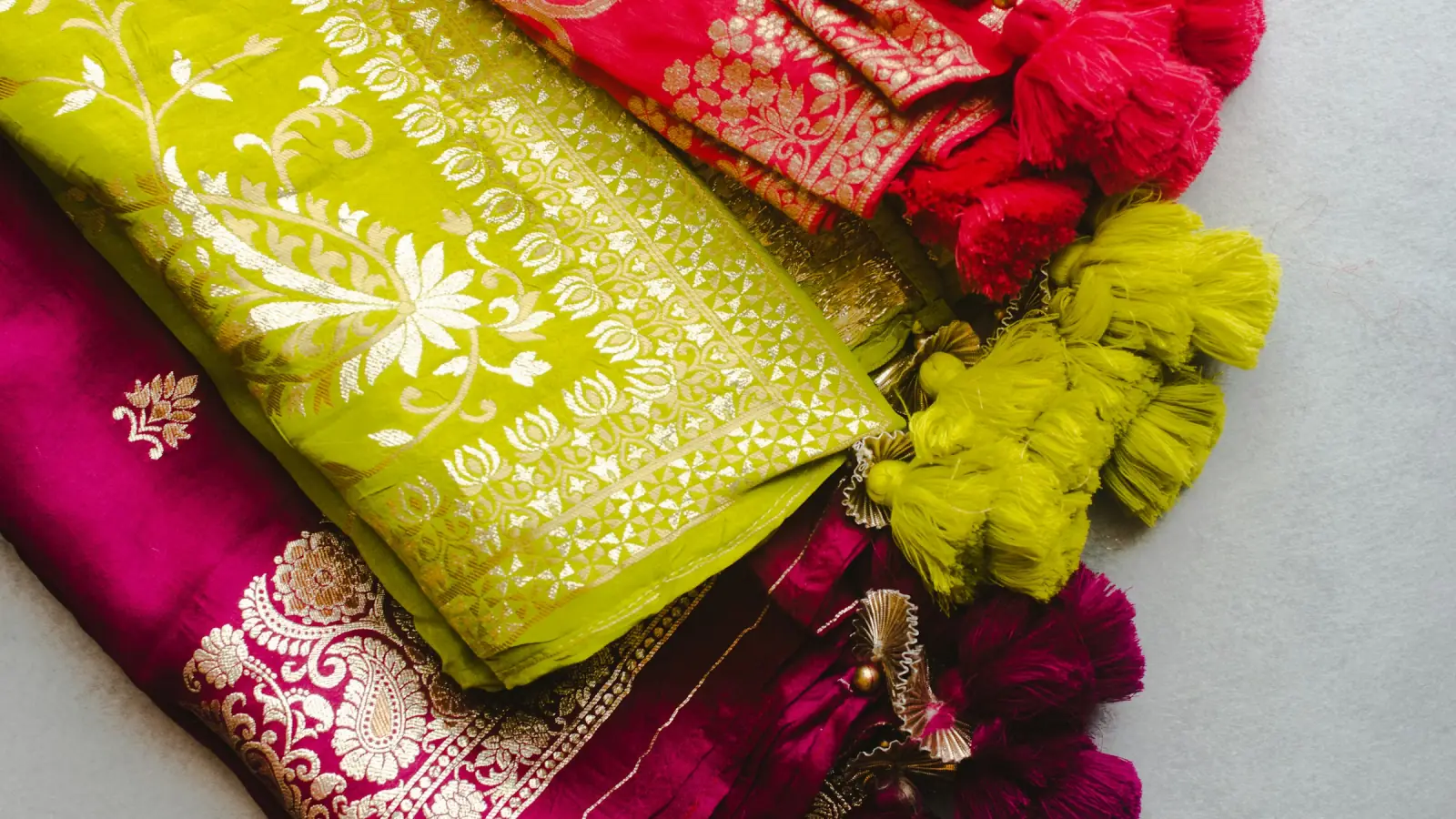
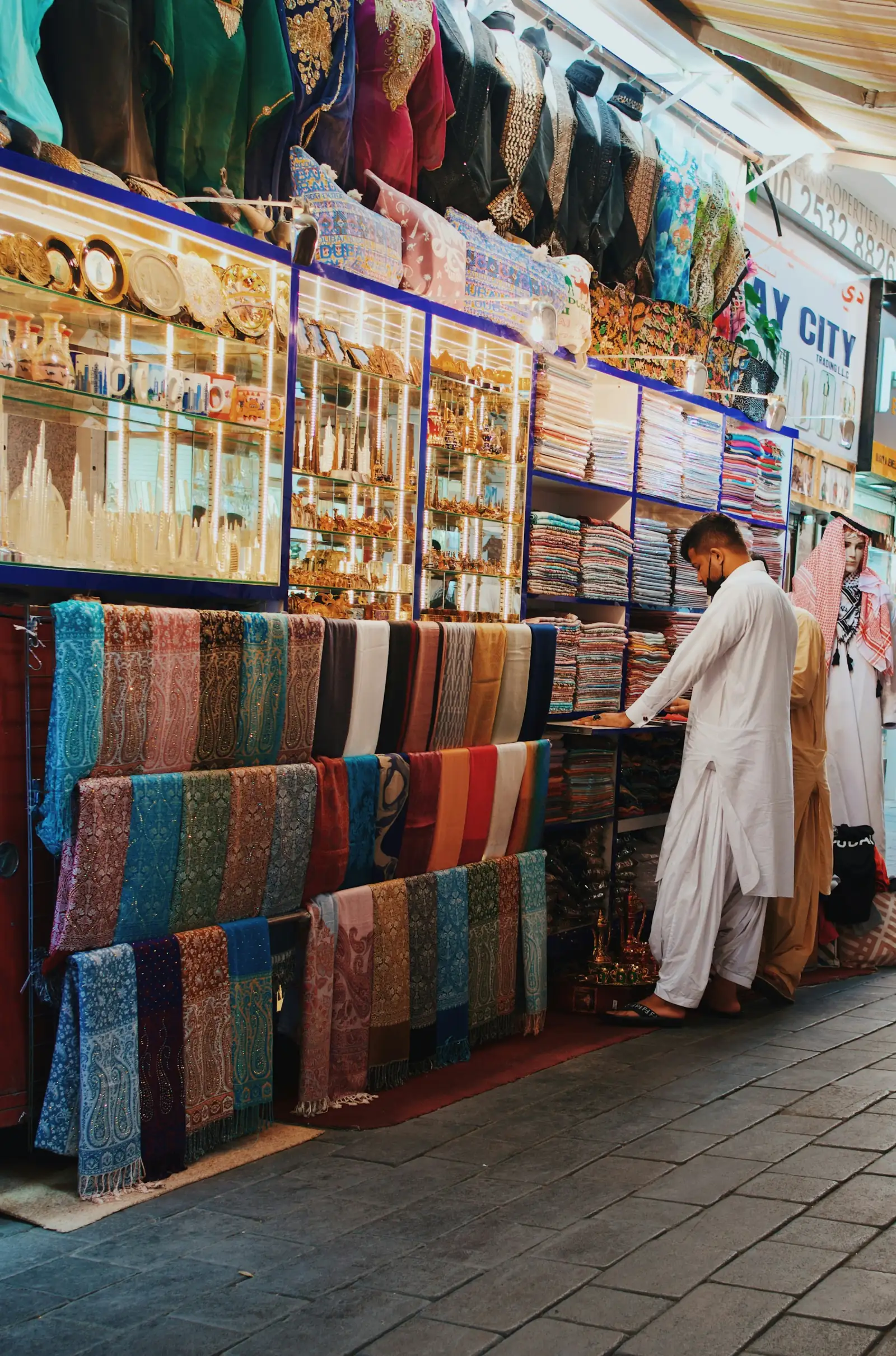
Photo: Jainica Dhingra on Unsplash
A woman walks into a cloth shop with a cutting from her daughter’s school uniform. She needs 2.35 metres of that exact grey, a lining, and while she is here, a printed suit piece for herself. The grey comes off a thaan that has maybe four metres left. The suit piece is a fixed-price set. She pays ₹500 in cash now and asks for the rest to go on the family’s account, as usual.
That is an ordinary sale in a textile shop. It is also exactly the sale that breaks most billing software. Metres with decimals. A roll that is turning into a remnant. Two kinds of product with different GST. A part-payment that needs to land on a khata, not in a diary.
If you are shopping for billing software for a textile shop, the long feature lists on vendor websites won’t tell you much. What matters is whether the software understands cloth. This guide sets out what that means in practice, the questions worth asking before you pay anyone, and how we built Kapda Stock to answer them. We make it only for textile and clothing businesses, so yes, we have a view. We have tried to make it a useful one.
Why a fabric counter is harder to bill than it looks
Software written for kirana stores, pharmacies or general retail assumes that one product is one countable thing. A fabric shop breaks that assumption several times an hour.
- You sell length, not pieces. A customer asks for 1.6 metres, or 2¼. If the software only accepts whole numbers, someone rounds, and every rounding is a small leak in your stock count.
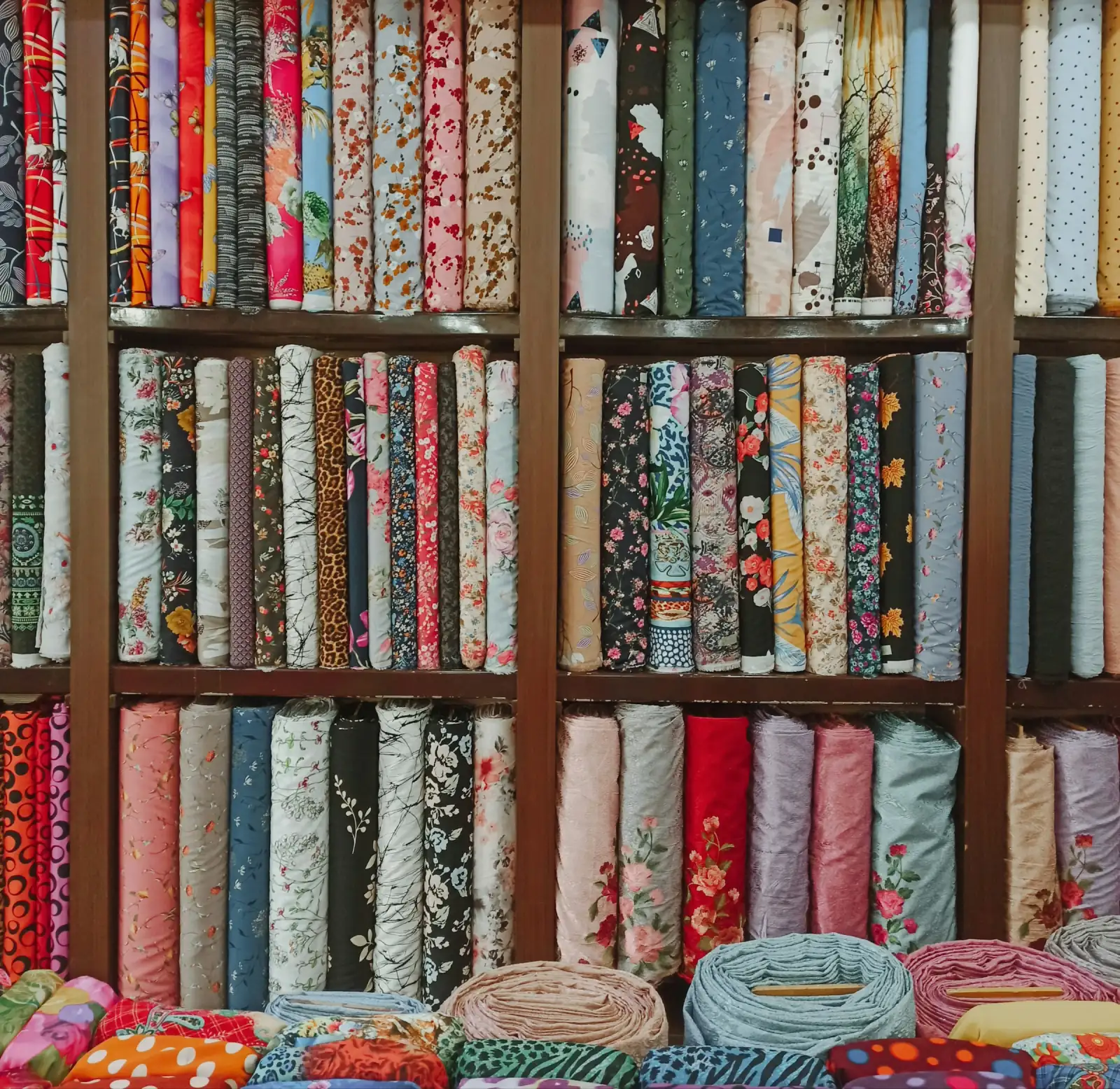
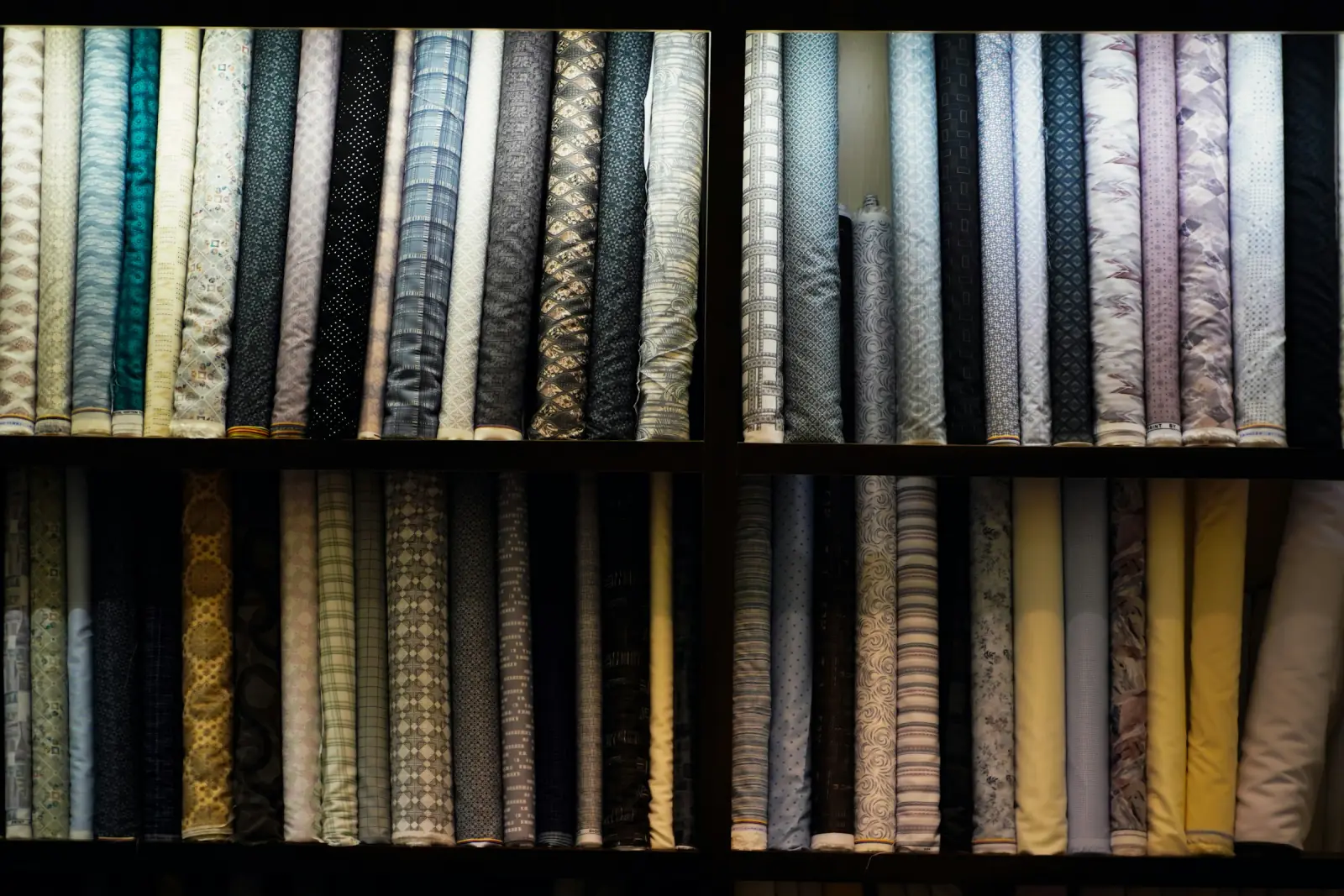
- Stock lives in rolls. Forty metres on the shelf might be one full thaan or six short ends nobody wants. The number alone doesn’t tell you which.
- One bill, several tax rates. Most fabrics sit at 5% GST. Readymade garments are 5% up to ₹2,500 a piece and 18% above it. A shop that sells suit pieces, dupattas and a few ready kurtis can have all of that on one bill.
- Credit is normal. Tailors, schools, regular families and the boutique two lanes over all buy on account. That is a ledger problem, and a reminder problem.
- Many shops do some wholesale too. Orders by design and shade, a broker, a transporter and an LR number. Retail-only software has no place to put any of it.
Hold the software you are considering up against those five, one at a time. Most options drop out by the second or third.
A scorecard for choosing textile billing software
Demos are designed to impress. A scorecard keeps you honest. Take this table into any demo, including ours, and ask the salesperson to show you each item on screen rather than describe it.
| Requirement | Why it matters in a cloth shop | Ask them to show you |
|---|---|---|
| Decimal metres | Rounding 2.35 m to 2 or 3 m corrupts stock | A bill for 2.35 m and the stock after it |
| Roll and remnant tracking | Forty metres in six short ends is not forty sellable metres | Where a single thaan’s remaining length shows |
| GST rate per product, by HSN | Fabrics and garments are taxed differently | A mixed bill split into CGST and SGST, or IGST |
| Customer khata with limits | Udhaar is daily business | A part-paid bill landing on the customer’s balance |
| Billing without internet | Power and data drop at the worst moment | A sale completed with Wi-Fi switched off |
| Staff permissions | Counter staff should not see your margins | A cashier login that cannot see cost price |
| Backups you control | Your sales history is your business | Where last night’s backup is stored |
The sections below go through each row and explain how Kapda Stock handles it, with links to the exact page in our documentation, so you can check every claim yourself.
Billing by the metre, with nothing lost to rounding
In Kapda Stock, every product has a unit. Pick MTR, YARD or KG for anything you sell by measure, and quantities hold up to three decimals. You can bill 2.5 metres at the counter, cut a 1.6 metre sample, or receive a roll that measured 64.008 metres. Pieces, sets, dozens and boxes stay whole numbers, as they should. The products guide lists every unit and field.
The selling price you set is per unit and includes GST, so a cambric at ₹140 a metre bills 2.35 metres at ₹329, and the tax is worked out of that figure. Barcode labels for measured products print the price with the unit, as *₹140.00 / MTR*, which saves a lot of “is this per metre or per piece?” at the counter.
A practical tip from shops already running this way: create one product per quality and shade. “Cotton cambric, white” and “Cotton cambric, sky blue” are two products with their own stock, their own minimum level and their own label. Search “cambric” at the counter and every shade shows up together with what is left of each. If you have hundreds of qualities, load them from a spreadsheet through bulk import instead of typing.
Thaan and chindi: what is really on the shelf
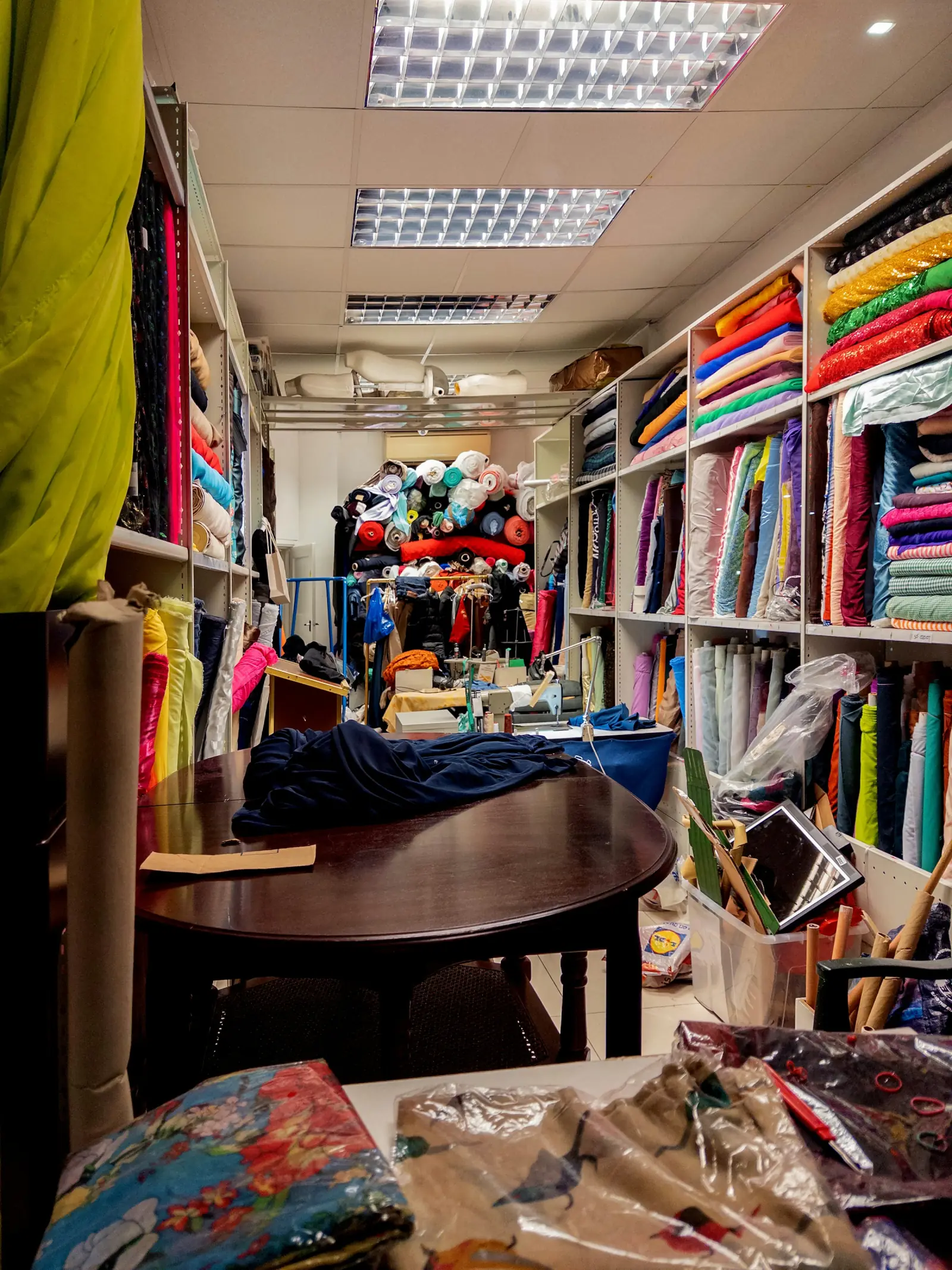
Stock in metres is only half the picture. A buyer who needs four metres for a pair of curtains doesn’t care that you have forty metres of the fabric if the longest piece is three. That gap, between total metres and usable lengths, is where fabric shops lose sales they don’t even know about.
Kapda Stock lets you register each thaan separately. When you record a purchase, type the roll lengths, say *25, 25, 20*, and each roll gets its own number. Cut from a named roll at the counter and its length comes down. When a started roll falls to 2 units or 10% of its original length, whichever is larger, it is marked as a remnant, so you can see which pieces are now chindi and price them to move. Stock adjustments and rolls explains the screens, and our longer piece on how to track rolls of fabric covers the method.
Wholesalers who sell whole rolls can go further: switch on Track by roll for a product and you get roll stock by design, colour and bale, packing-list import with a check for billed-versus-measured shortage, and a roll picker when you dispatch. Retail shops can leave it off. It is optional for that reason.
GST that follows the HSN code of each quality
GST on textiles isn’t hard, but it is fiddly, and fiddly is where hand-written bills go wrong. Each product in Kapda Stock carries its own HSN code and GST rate, set once when you add it. Every new shop comes with the textile HSN range, 5001 to 6310, already loaded, so you pick from a list rather than hunting through a government PDF. See HSN codes and GST rates.
Most woven and knitted fabrics are at 5%. Readymade garments are at 5% when the sale value is up to ₹2,500 a piece and 18% above that. A shop selling unstitched suit pieces and a rack of ready kurtis will deal with both, and the software has to apply the right rate to each line without anyone thinking about it. Rates change with GST Council decisions, so confirm each product’s rate with your CA and update it in the app when a notification changes it. If you are unsure of a code, our free HSN code finder is a quick place to start.
At the counter, prices include GST, so the customer pays what the label says. The bill splits it out: CGST and SGST for a sale within your state, IGST when the buyer’s GSTIN belongs to another state. The software reads the state from the first two digits of each GSTIN, so getting your own GSTIN and your business customers’ GSTINs right is the only thing it needs from you. GST basics shows the arithmetic, and the GST calculator is there for quick checks.
HSN & GST Rate Chart for Textile Shops
One printable sheet with every code and rate in this finder — keep it at the billing counter.
- Every textile product in the finder with its HSN code
- Alternative codes by fibre, weight and knitted / woven
- 5% vs 18% rule and the ₹2,500 per-piece limit explained
- Print it or save as PDF for the counter
A counter that holds up in wedding season
Feature lists matter less than one thing: can your staff bill a crowd quickly without making mistakes? The POS billing screen in Kapda Stock is built for a busy counter:
- Search or scan. Press F2 and type a quality or SKU, or scan the label with a scanner gun or the phone’s camera (F3). Type the metres on the line.
- Pick the customer, or leave it blank for a walk-in. A regular’s outstanding balance shows right in the picker, so nobody is surprised.
- Bargain if you must. Change a line’s rate to the agreed price, take a rupee discount off one line, or a percentage off the bill.
- Take payment any way it comes. Cash, UPI or card, split between them, or part now and the rest on the khata.
- Complete with F9 and print an 80 mm thermal receipt, or download the A5 invoice PDF.
When a customer goes to compare a shade in daylight at the door, Park bill (F6) holds the bill and frees the counter. Held bills (F7) brings it back. In a shop where people deliberate over colour, this one key saves more time than anything else on the screen.
Add your UPI ID once in invoicing settings and every receipt carries a Scan to pay QR code with the bill amount already filled in. It opens in GPay, PhonePe, Paytm, BHIM and JKPay, and the money goes straight to your bank.
When the internet drops mid-sale
Power cuts and weak mobile data are normal in plenty of bazaars. Kapda Stock’s POS keeps billing through them: if the POS screen is already open when the connection goes, a completed sale is saved on the device and the cart clears for the next customer. When the connection returns, the queued sales sync and become normal invoices with normal numbers. Keep the POS open on the counter device and don’t clear the browser before the sales have synced; the offline mode guide has the details, and we wrote about setting up a counter for it in billing when the internet goes down.
Udhaar, tailors and the families who pay monthly
Ask any cloth merchant where their money is stuck and they will point at a diary. Credit is part of how the trade works, especially with tailors, school-uniform orders and old family customers. The trouble is never giving credit. It is remembering it, and asking for it without spoiling the relationship.
Every customer in Kapda Stock has a running khata. Any unpaid part of a bill goes onto it on its own. A payment settles the oldest bills first, and each bill shows as paid or part-paid. Set a credit limit per customer, and a bill that would cross it needs an admin or the owner to approve. A statement PDF shows every bill and payment, which usually ends a disagreement before it starts.
Then there is the asking. Switch on the udhaar recovery ladder and the app sends a polite WhatsApp reminder at 7 days and a reminder with a UPI payment link at 15. At 30 days, Growth sends a firmer WhatsApp and Professional can place an AI voice call. A customer who promises a date pauses the reminders until that date. We go through the whole approach in never chase udhaar again.
Buying, karigars and the back room
Billing software that stops at the counter leaves half the shop on paper. Stock has to come in somewhere, and in textiles it often goes out again before it is sold, to a tailor or an embroiderer.
- Supplier bills by photo. Photograph a printed supplier bill and the browser reads the lines into a review grid. Correct anything it misread, and the stock comes in through a purchase order and goods receipt in one go. See scan a supplier bill.
- Purchase orders to your mills and wholesalers, with a printable A4 order you can share. See purchase orders.
- Job work. Send fabric to karigars for stitching, dyeing, embroidery or weaving, receive the finished pieces back into stock, and keep track of the wages you owe. See job work.
- Stitching orders. A suit to be stitched by Friday is a sales order with a delivery date, billed when it is collected.

If you also sell wholesale
Plenty of fabric shops run a retail counter at the front and a wholesale business from the back. Kapda Stock handles both from one login. A sales order works as a proper wholesale order form: design, shade, HSN, cut, pieces and metres per line, rate per metre or piece, the buyer’s order number, ship-to address, transport and a saved broker list. It prints as an A4 order form you can share on WhatsApp.
When you confirm an order, its stock is held back so the retail counter can’t sell it by accident. Dispatch goes out in full or in part on a delivery challan with transport and LR number, and each lot bills its share of the order. A market salesperson can take orders on a phone and see only their own, with no access to your customers’ balances or your cost prices.
Your staff, your numbers
A billing system that every employee can see into is not something most owners are comfortable with, and they are right. In Kapda Stock you decide, section by section, what each person can see or change through the module access matrix. Give the counter boy POS and nothing else. Give your accountant Finance and GST and nothing else.
Two switches matter especially in a cloth shop. See cost price & profit hides purchase prices and margins, so a salesman can’t tell a customer what you paid for a quality. Give discounts / change price decides who may bargain at the counter. Changes take effect within about a minute, even for someone already signed in.
Reports a fabric shop actually reads
Every bill you print is a record of what customers wanted. The reports turn that into decisions for your next buying trip to Surat, Ludhiana or Amritsar:
- Dead stock lists anything with stock and no sale for 90 days or more. In fabric that is usually last season’s prints and odd shades. See the reports hub.
- ABC analysis ranks qualities by sales, so the few that bring in most of your revenue never run out. See ABC analysis.
- Sales by time shows your busiest hours and weekdays in IST, which tells you when to have two people on the counter. See sales by time.
- Category performance compares suit pieces, sarees, shirting and bedding on revenue and margin. See category performance.
- Profit and loss for any month or financial year, and a Tally export for your CA if they keep the books in Tally.
At month-end, the GST & Compliance screen checks your bills for the mistakes that cause trouble at filing time, such as a malformed GSTIN or a line with no HSN code, and exports one workbook for your CA. The GST returns guide walks through it, and our article on GST compliance on autopilot explains the monthly routine.
Backups and the safety of your data
Ask any vendor where your data lives and what happens if their server has a bad day. Kapda Stock gives every business its own separate workspace; one shop’s data never mixes with another’s. Every night at 2 AM your workspace is backed up, and if you connect your own Google Drive the backup lands in a folder there, outside our platform, where only you control it. You can also press Back up now before a big change. See backups and data isolation.
Records that matter are never erased by accident either. Invoices and payments are kept even when cancelled, and deleted products or customers go to a recycle bin that an admin can restore from.
Ten questions to ask before you pay for any software
- Can I bill 2.35 metres, and does stock come down by exactly 2.35?
- Can I see each roll’s remaining length, and which pieces are now remnants?
- Does each product carry its own HSN code and GST rate, with CGST/SGST or IGST chosen from the customer’s GSTIN?
- Does a part-payment go onto the customer’s khata automatically, with a credit limit I can set?
- Will the counter keep billing if the internet drops?
- Does it print on an 80 mm thermal printer and put a UPI QR code on the bill?
- Can I hide cost prices and control discounts for each staff member?
- Does it handle purchases, job work and wholesale orders, or only the counter?
- Where is my backup, and can it go to my own Google Drive?
- What is the full price, including any setup fee or charge per bill?
Kapda Stock answers yes to the first nine, and the tenth is answered in the next section. If you are comparing several options, our features page puts everything in one place.
What Kapda Stock costs a textile shop
There are two self-serve plans, billed monthly or yearly. Prices are before 18% GST. There is no setup fee and no charge per bill.
| Growth | Professional | |
|---|---|---|
| Monthly | ₹349 | ₹599 |
| Yearly | ₹3,499 | ₹5,999 |
| Team members (owner not counted) | 3 | 5 |
| Products (each quality and shade counts as one) | 1,000 | 10,000 |
| Invoices per month | 5,000 | 15,000 |
Products are where fabric shops should do a little arithmetic. If you stock 80 qualities in an average of eight shades, that is 640 products, comfortably inside Growth. A larger shop with sarees, suiting, shirting, dress material and bedding will usually need Professional. Every billing, stock and GST feature in this guide is in both plans; Social Media and AI calls come with Professional. The pricing page has the full comparison.
Switching over without closing the shop
Nobody can afford to shut the counter for a week to change software. The shops that move smoothly do it in stages:
- [Sign up](/signup) with your shop name, address and GSTIN.
- Import your fast-moving qualities first, every shade, with the HSN code and rate. The slow ones can follow over the week.
- Register the rolls for those qualities and print labels.
- Add your UPI ID so every bill carries a QR code.
- Run one day in parallel with your old method, then drop the old method.
- Bring over udhaar balances for your regular credit customers.
If you are moving from a register or another program, our 30-day switching plan sets it out week by week. For a shorter overview aimed at cloth shops, see billing software for cloth shops. And if your shop is mostly readymade garments, read our companion guide on GST billing software for garment shops.
Frequently asked questions
Which is the best billing software for a textile shop in India?
The best choice is software built for cloth: it should bill in decimal metres, track each roll and remnant, carry an HSN code and GST rate per product, keep a khata for credit customers, and keep billing when the internet drops. Kapda Stock is made only for textile and clothing businesses and does all of these.
Can billing software handle fabric sold by the metre?
Kapda Stock can. Set a product’s unit to MTR, YARD or KG and quantities hold up to three decimals, so you can bill 2.35 metres and stock comes down by exactly that. Pieces, sets and boxes stay whole numbers. Barcode labels show the price per metre.
What GST rate applies to fabric and garments?
Most woven and knitted fabrics are taxed at 5%. Readymade garments are taxed at 5% when the sale value is up to ₹2,500 a piece, and 18% above that. Rates change with GST Council notifications, so confirm each product’s HSN code and rate with your CA.
Does textile billing software work without internet?
Kapda Stock’s POS does. If the POS screen is open when the connection drops, completed sales are saved on the device and sync automatically into normal invoices when the internet returns. Other screens, such as reports, need a connection.
How much does billing software for a textile shop cost?
Kapda Stock costs ₹349 a month or ₹3,499 a year on Growth, and ₹599 a month or ₹5,999 a year on Professional, before 18% GST. There is no setup fee and no charge per bill. See the pricing page for the limits on each plan.
See it working in your own shop
Set up a workspace in under a minute, or read the step-by-step guides in the docs.