Best GST billing software for garment shops in India
The GST mistakes that cost garment shops money are rarely dramatic. A wrong rate on a ₹2,700 suit, a typo in a buyer’s GSTIN, an exchange done by editing the bill. This guide shows what correct GST billing looks like for a clothes shop, and how Kapda Stock keeps every bill clean.
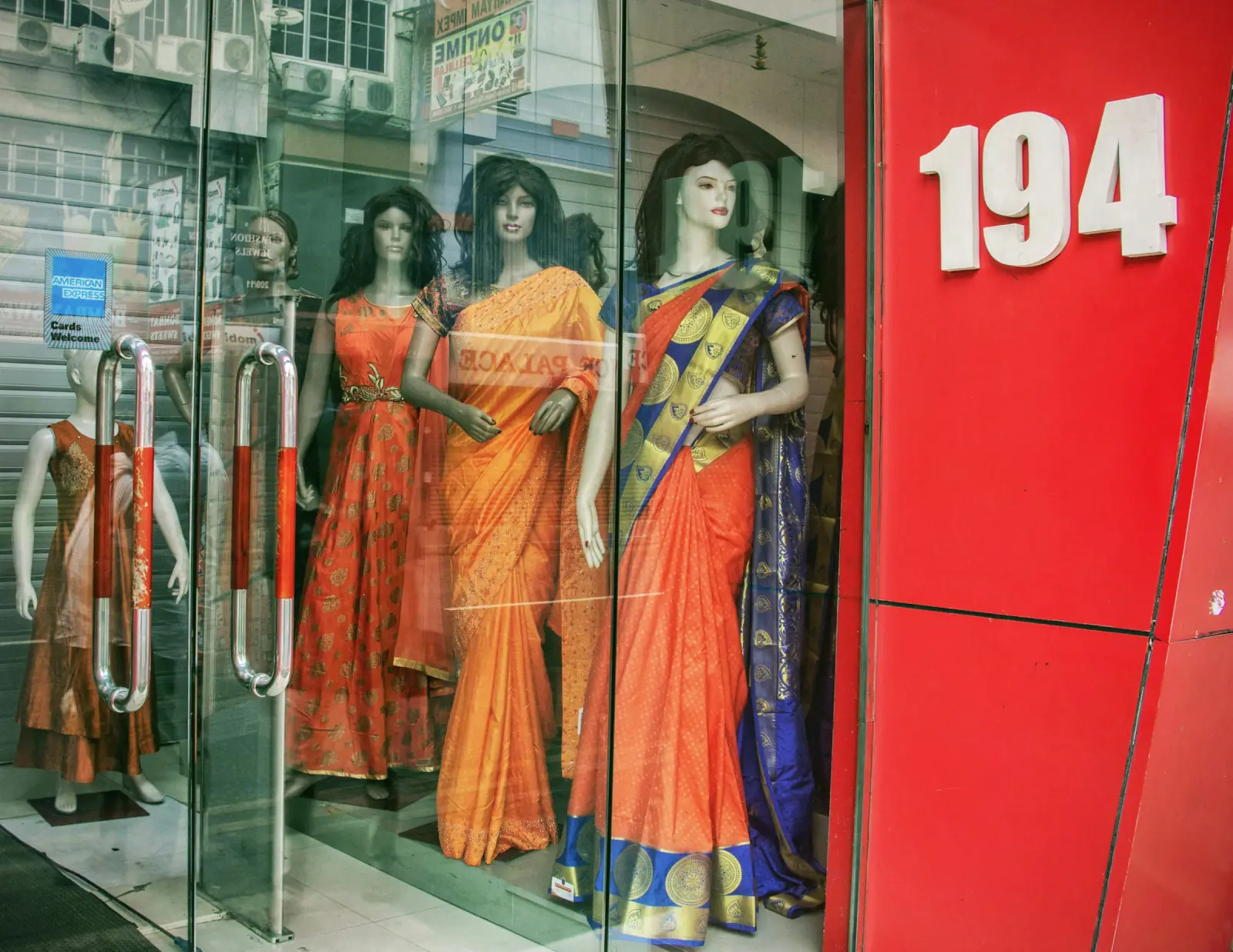
Photo: Ranmali Kirinde on Unsplash
The phone call usually comes around the ninth of the month. It is your CA, and the tone is polite but tired. One of your wholesale buyers can’t see two of your invoices in their GSTR-2B. Could you check the GSTIN you billed them on? Also, why is there a ₹2,800 lehenga at 5% in last month’s sales?
None of this is fraud, or even carelessness. It is what happens when GST is handled by a calculator, a printed rate chart taped to the counter and a staff member who joined in Diwali. Each mistake is small. Together they cost you interest, your CA’s time, and sometimes a good customer’s trust.
Good GST billing software for a garment shop prevents these mistakes at the counter, not at month-end. This guide explains what a correct GST bill for a clothes shop involves, where garment shops most often go wrong, and how Kapda Stock handles each step. It isn’t tax advice, and your CA has the final word on your business. But you will go into your next conversation with them knowing exactly what to ask.
What a GST bill from a garment shop must carry
A tax invoice is a legal document, and the GST rules list what it should show. For a typical garment shop that means:
- Your name, address and GSTIN.
- An invoice number that is unique for the financial year, in one running series, and no longer than 16 characters.
- The date of the invoice.
- The buyer’s name, address and GSTIN when the buyer is registered.
- HSN code, description and quantity for each item, with the unit.
- Taxable value after any discount, the GST rate, and the tax as CGST and SGST, or IGST.
- The total, and the place of supply for an inter-state sale.
Kapda Stock’s invoice PDF carries your business details and GSTIN, the invoice number and date, each line with its HSN code and GST rate, quantity, rate and amount, the taxable value, CGST and SGST or IGST, a round-off and the total in words. For a business customer with a GSTIN it adds their address and GSTIN. The same document goes out whether you print it, email it or send it on WhatsApp. See printing and PDF.
Keep the invoice number under 16 characters
This one trips up shops that design their own numbering. *SHAHGARMENTS/2026-27/00042* looks professional and breaks the 16-character limit. In Kapda Stock’s invoicing settings you choose a short prefix and a format; *INV/26-27/0042* is 14 characters. The running number restarts every April and is never reused, so the series stays clean even if you change the format mid-year. Pick your format before the first bill of the financial year, and your CA will thank you.
The ₹2,500 rule, and the price band nobody talks about
Since 22 September 2025, readymade garments with a sale value of up to ₹2,500 a piece attract 5% GST, and those above ₹2,500 attract 18%. For a garment shop this is the single most important rule to get right, because almost every shop sells on both sides of the line.
| Item | Sale value per piece | GST rate | Customer pays |
|---|---|---|---|
| Cotton kurti | ₹1,000 | 5% | ₹1,050 |
| Men’s formal shirt | ₹2,000 | 5% | ₹2,100 |
| Georgette suit set | ₹2,500 | 5% | ₹2,625 |
| Embroidered lehenga | ₹3,000 | 18% | ₹3,540 |
| Woollen jacket | ₹4,500 | 18% | ₹5,310 |
Now look at the gap between the third and fourth rows. The threshold applies to the sale value, which is the price before GST, but your tags show the price the customer pays. A piece with a tag of ₹2,625 or less sits at 5%. A tag of ₹2,950 or more sits at 18%. Anything priced between ₹2,625 and ₹2,950 is awkward: at 5% the value works out above ₹2,500, and at 18% it works out below. There is no rate that fits neatly.
The simplest answer most shops reach, after a conversation with their CA, is to keep tag prices out of that band altogether. Price at ₹2,599 or at ₹2,999, not ₹2,750. It is a small decision that saves an argument on every one of those pieces.
Fabrics, dupattas and unstitched suit pieces follow their own HSN codes, mostly at 5%. A shop that sells both stitched and unstitched clothing should set every product’s rate individually, which is how Kapda Stock works anyway. If you want to check the arithmetic on a particular price, try the GST calculator.
HSN & GST Rate Chart for Textile Shops
One printable sheet with every code and rate in this finder — keep it at the billing counter.
- Every textile product in the finder with its HSN code
- Alternative codes by fibre, weight and knitted / woven
- 5% vs 18% rule and the ₹2,500 per-piece limit explained
- Print it or save as PDF for the counter
HSN codes for garments without the headache
Garments sit mainly in two HSN chapters: 61 for knitted or crocheted apparel, such as T-shirts, sweaters and most innerwear, and 62 for woven apparel, such as shirts, trousers, kurtas and suits. Shawls, stoles, bedsheets and other made-up articles fall in 63. The four-digit heading inside the chapter depends on what the garment is and, sometimes, the fibre.
How many digits must the invoice show? Businesses with an aggregate turnover up to ₹5 crore must show at least four digits on invoices to registered buyers; above ₹5 crore, six digits on every invoice. Kapda Stock accepts HSN codes of four to eight digits, so either works.
Every Kapda Stock workspace comes with the full textile HSN range, 5001 to 6310, already loaded. When you add a product you pick its HSN code and GST rate once, and both print on every bill and every barcode label after that. See HSN codes and GST rates. For a quick lookup with worked examples either side of ₹2,500, use our free HSN code finder.
CGST and SGST, or IGST: let the GSTIN decide
The rule is simple. A sale within your state is taxed as CGST plus SGST, each half the rate. A sale to a registered buyer in another state is taxed as IGST, the full rate in one line. A tourist from Punjab who buys at your counter in Srinagar pays CGST and SGST, because the sale happens at your shop.
Kapda Stock reads the state from the first two digits of each GSTIN, so it chooses the right split on its own: CGST and SGST for walk-ins and same-state buyers, IGST when the buyer’s GSTIN is from another state. Prices at the counter include GST, so the customer pays the tag price and the bill works the tax out of it. A ₹1,050 kurta at 5% shows a taxable value of ₹1,000 and GST of ₹50. See GST basics.
That means the software is only as good as the GSTINs it holds. Enter your own in shop details and your business customers’ in their customer profiles before you bill them. An out-of-state buyer saved without a GSTIN will be billed CGST and SGST, and that is the invoice your CA calls you about.
Discounts that reduce tax, not just price
A discount shown on the bill at the time of sale reduces the taxable value, so the customer pays GST only on what they actually pay. Shops that knock ₹200 off verbally and then bill the full price aren’t just being generous; they are overpaying GST on money they never received.
In Kapda Stock a line discount comes off that line before tax is worked out. A bill discount is spread across all the lines in proportion to their value, so each line’s GST reflects what the customer really paid. The bill shows the savings, the taxable value and the tax, so a customer who bargained can see it was honoured, and so can your CA.
Exchanges, returns and credit notes done properly
In a garment shop, exchanges are as routine as sales. The tempting shortcut is to change the original bill: strike out the M, write the L. Under GST an issued invoice should not be altered. The correct record is a credit note against the original invoice, followed by a new bill for the new piece.
Kapda Stock does this from the original invoice. Start a full or partial return, and the piece goes back into stock under its exact size and colour, a numbered credit note is issued with a CN- prefix, GST is reversed, and the customer’s balance comes down if they owed you. The original invoice is never touched, and the app never lets you credit more than was billed. Issued invoices can’t be edited at all; see invoices.
One date to remember: a credit note for a financial year has to be declared by 30 November of the following year, or by the date the annual return is filed if that is earlier. Doing returns properly every day means you never have a pile of old exchanges to sort out against that deadline.

Non-GST bills and proformas: two shortcuts to understand
Every garment shop owner has been asked for a “kachcha bill” at some point. Most billing software, Kapda Stock included, can print a bill with no GST broken out: untick Charge GST at the POS and the customer pays the same total, but no CGST, SGST or IGST appears and the lines are recorded at 0%.
What matters is what happens next. In Kapda Stock a non-GST bill is still a normal completed sale, and it still appears in your GST figures, as a supply with zero tax. The software doesn’t hide it, and the month-end checks will flag taxable invoices carrying no GST so your CA can see them. That is deliberate. A billing system that lets sales quietly disappear from the tax figures is a risk to you, not a favour. Whether such a sale is taxable, exempt or nil-rated is your accountant’s decision; read GST basics before using non-GST bills at all.
Proformas are different, and genuinely useful in a garment shop. A family ordering outfits for a wedding wants something on paper with prices before they commit. A proforma looks like an invoice but is an estimate: it can’t be issued, paid or counted, and it is left out of sales reports, GST figures and your plan’s invoice count. Create it from a quotation, and when the family confirms, convert the quotation into a real invoice. The GST is charged once, on the actual bill.
Your B2B buyers and their GSTR-2B
If you sell to other shops, boutiques or institutions, your invoices feed straight into their input tax credit. They see what you filed in their GSTR-2B, and if your figures don’t match their purchase records, they lose the credit until it is fixed. For many garment wholesalers this matters more than anything on the retail side, because a buyer who keeps losing credit eventually takes their business elsewhere.
Kapda Stock shows B2B sales by customer each month: every GSTIN you billed, with the number of invoices, taxable value and tax. It is the list your buyers will match against, so check it before your CA files. The pre-filing checks flag any customer GSTIN that isn’t a valid number, because the GST portal rejects the whole return over a single malformed one. They also flag large sales recorded without a GSTIN, a hint that a business buyer was billed as a walk-in.
Month-end: hand your CA a clean pack
Most garment shops don’t file their own returns, and shouldn’t have to. What they can do is hand their CA figures that need no cleaning. Open GST & Compliance, pick the month, and you see the taxable value, CGST, SGST, IGST and total tax, with a count of B2B and B2C invoices. Then come the checks, listed before anything else:
- Customer GSTIN is not a valid number: correct it on the customer before filing.
- Items sold without an HSN code: fix the product.
- Tax type does not match the customer’s state: usually a GSTIN entered after the sale.
- Taxable invoices carrying no GST: fine for exempt goods, otherwise tax was missed.
- Large sales recorded without a GSTIN: a likely B2B sale billed as retail.
Below the checks is the HSN summary, quantity and tax per HSN code and rate, built the way table 12 of GSTR-1 needs it. Download the CA pack exports one workbook with the summary, invoice register, HSN summary, B2B ledger, the checks and the raw GSTR figures. Monthly filers send it before the 11th, when GSTR-1 is due. Once your CA files, record the ARN in the app so you always know what has gone in. The compliance overview and GST returns guide explain each part, and our article on GST compliance on autopilot sets out a monthly routine.
If your CA keeps your books in Tally, the Tally export gives them sales vouchers with the CGST, SGST and IGST ledgers already split, so nobody types your bills twice. Our guide to accounting software used in India explains how billing and accounting fit together.
What GST billing software does not do for you
Some billing products promise to “handle all your GST”. It is worth being precise about what any billing software can and can’t take off your plate, so this is Kapda Stock’s list, without the gloss.
- Filing returns. GSTR-1 and GSTR-3B are filed on the GST portal, by you or your CA. Kapda Stock prepares the figures and records the ARN.
- E-invoices. Businesses with aggregate turnover above ₹5 crore must register B2B invoices on the Invoice Registration Portal. Kapda Stock does not generate the IRN; it is done on the portal. Most retail garment shops are below the threshold, and retail bills to consumers don’t need it.
- E-way bills. Moving goods worth more than ₹50,000 usually needs an e-way bill, generated on the e-way bill portal.
- Input tax credit. Claiming and reconciling credit on your purchases is your CA’s job.
- The composition scheme. A composition dealer can’t charge GST on bills. Kapda Stock’s bills are built for regular GST-registered shops, so if you are under composition, talk to your CA first.
We would rather you know this before signing up than discover it in March. What Kapda Stock does is make every bill correct at the counter and every month ready for filing, which is where most garment shops lose their time.
A GST checklist for choosing billing software
- Does each product carry its own HSN code and GST rate, so 5% and 18% garments can share a bill?
- Is the split between CGST and SGST, or IGST, decided automatically from the GSTINs?
- Can I set an invoice number format that stays under 16 characters and restarts each April?
- Are exchanges done through credit notes, with issued invoices locked from editing?
- Do discounts reduce the taxable value on the bill?
- Does it flag a bad GSTIN or a missing HSN code before my CA files?
- Can it export an HSN summary, a B2B list and a CA pack, and Tally vouchers?
- Is the vendor clear about what it does not do, such as e-invoices?
Pricing, and a sensible way to start
Kapda Stock costs ₹349 a month or ₹3,499 a year on Growth (3 team members, 1,000 products, 5,000 invoices a month), and ₹599 a month or ₹5,999 a year on Professional (5 team members, 10,000 products, 15,000 invoices a month). Prices are before 18% GST, with no setup fee. Every GST feature in this article is in both plans. See the pricing page.
The cleanest time to switch is the first of a month, so the whole month’s GST comes from one system. Sign up, enter your GSTIN, set your invoice format, add your products with their HSN codes and rates, and add GSTINs for your business customers. From that day on, every bill is correct when it is printed.
For the counter side of running a clothes shop, read how to choose POS software for a clothing store and billing software for readymade garments. If you sell fabric as well, see our textile shop billing software guide.
Frequently asked questions
Which is the best GST billing software for a garment shop?
Choose software that carries an HSN code and GST rate on every product, picks CGST and SGST or IGST from the GSTINs, handles exchanges through credit notes, and checks your bills before filing. Kapda Stock is built for textile and garment shops and does all of this.
What is the GST rate on readymade garments?
From 22 September 2025, readymade garments with a sale value of up to ₹2,500 a piece attract 5% GST, and those above ₹2,500 attract 18%. The sale value is the price before GST. Confirm each product’s rate with your CA, especially near the threshold.
Which HSN codes do garments use?
Knitted or crocheted apparel falls in HSN chapter 61, woven apparel in chapter 62, and other made-up textile articles such as shawls in chapter 63. Shops with turnover up to ₹5 crore show at least four digits on invoices to registered buyers. Our HSN code finder helps you look them up.
How do I record a garment exchange under GST?
Do not edit the original invoice. Issue a credit note against it for the piece that came back, which reverses the GST and returns the piece to stock, then bill the replacement as a new sale. Kapda Stock does both steps from the original invoice.
Does Kapda Stock file GST returns or generate e-invoices?
No. Kapda Stock calculates GST on every bill, checks the month for common errors and exports a pack for your CA, who files on the GST portal. E-invoices and e-way bills are generated on their government portals. You can record the ARN of each filed return in the app.
See it working in your own shop
Set up a workspace in under a minute, or read the step-by-step guides in the docs.