How local fabric stores can run inventory and billing without guesswork
Shoppers pick a local fabric store for the range, the advice and the trust. They come back when the shop knows what it has, bills quickly and keeps the khata straight. Here is how to run the back of the shop as well as the front.
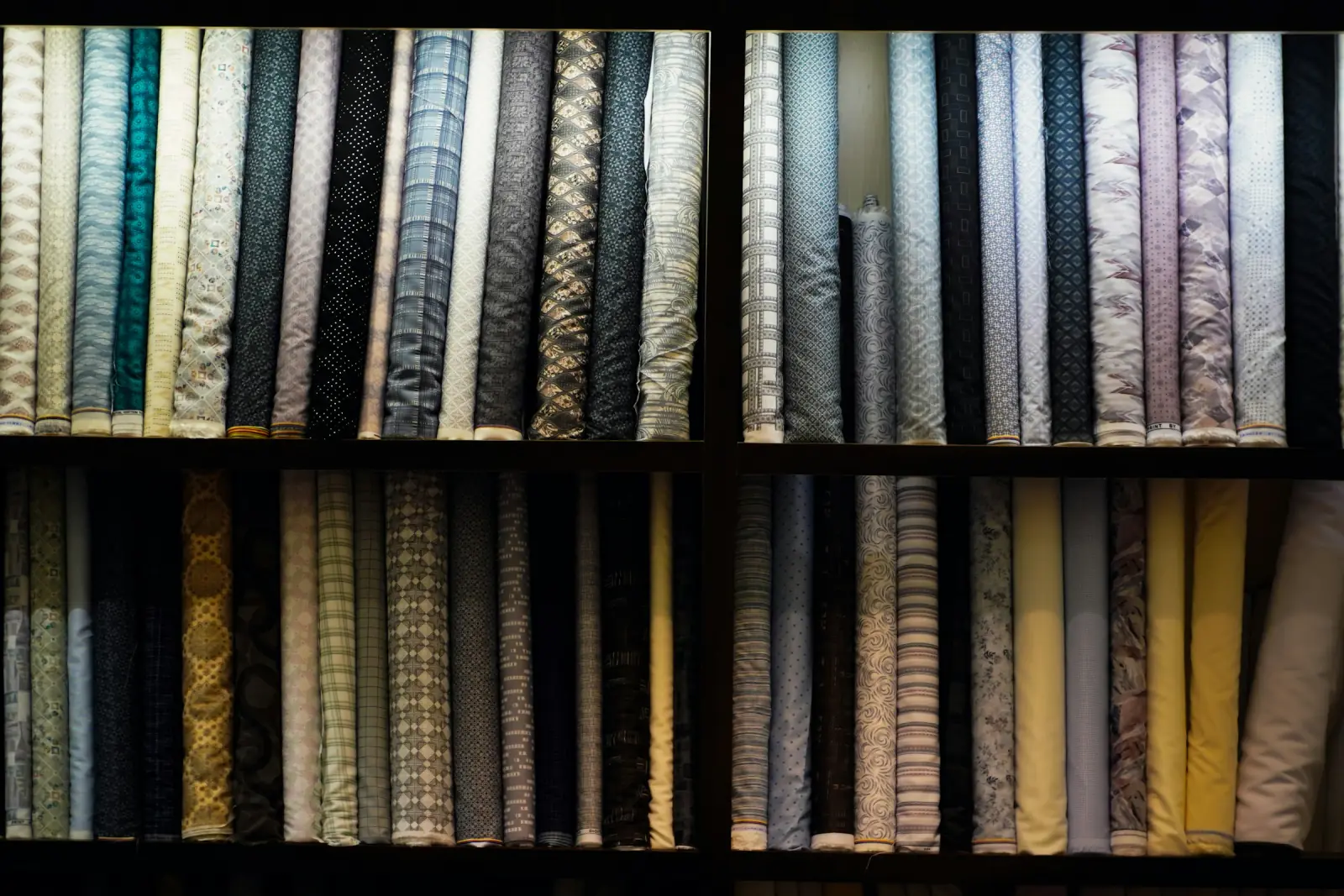
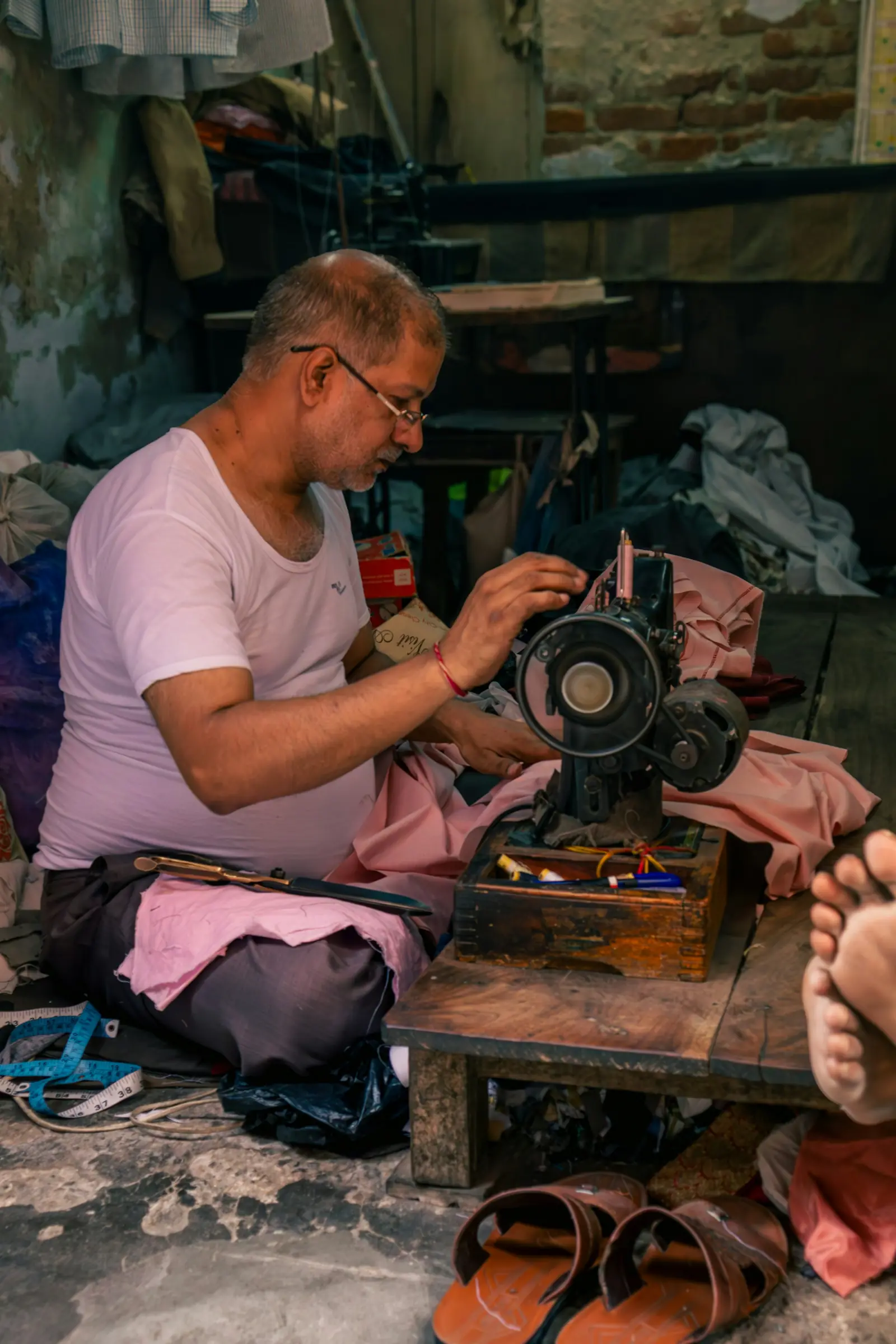
Photo: Adhitya Sibikumar on Unsplash
A customer walks in holding a small scrap of bottle-green cotton. She bought three metres of it last month for her daughter’s kurta, the tailor ran short, and she needs one more metre. The owner looks at the scrap, says “haan, hai,” and disappears into the back. Eight minutes later he comes out with a green that is close but not the same, and a story about the new lot being slightly darker.
Nobody in that scene did anything wrong. The shop had the fabric once. It just had no quick way of knowing whether it still did, which roll it came from, or when the last of it went. Multiply that by forty customers on a Saturday and you have the everyday reality of most local fabric stores in India: a good range, loyal customers, and an owner carrying the whole inventory in his head.
This guide is about the back of the shop: how you name and count stock, how you handle fabric that sells by the metre, how you bill quickly without mistakes, how you keep udhaar under control, and how you decide what to buy next. Some of it needs software and a lot of it doesn’t. Where Kapda Stock handles a step, we show you how. Where it has limits, we tell you those too.
Why people still choose local fabric stores
When someone searches for fabric stores near them, they are rarely looking for the cheapest cotton on the internet. They want to touch the cloth, hold two shades against each other in daylight, ask whether this georgette will survive a wash, and get it cut to the length their tailor asked for. Online stores can’t do any of that. A neighbourhood shop can, and that is why local fabric shopping has survived every wave of malls and marketplaces.

What brings a shopper back is more ordinary. Did the shop have what it said it had? Was the price the same as last time? Did the bill take two minutes or twelve? Could they pay by UPI? If they bought on credit, did the shop remember the right amount? Those questions are all answered behind the counter, not on the shelf.
Where a fabric shop quietly loses money
A garment shop sells pieces, and pieces are easy to count. A fabric shop sells lengths off rolls that arrive in one size and leave in dozens of smaller ones. Most of the leakage in a cloth business comes from that one difference, and very little of it shows up until the year-end stock count.
| Leak | What it looks like | What it costs you |
|---|---|---|
| Unrecorded cuts | A sample piece for the tailor, a quick half-metre for a regular, no bill | Stock on paper is higher than stock on the shelf |
| Forgotten remnants | The last 1.5 m of a thaan folded into a corner | Money you already paid for, sitting unsold for months |
| Guessing the reorder | Buying “the usual” from the wholesaler every trip | Fast colours run out while slow ones pile up |
| Loose udhaar | Credit noted in a diary, or not at all | Amounts forgotten, disputed or never collected |
| Slow billing | Totals worked out on a calculator, GST done by feel | Queues on busy days, mistakes on every tenth bill |
None of these is dramatic on its own. Together, over a year, they are often the gap between the margin you think you make and the one your CA finds.
Start with how you name and count your stock
Before you think about software, get one thing settled: what counts as a single item in your shop? If “cotton” is one item, you will never know which colour is running out. If every roll is its own item, you will drown in data entry. Most shops land in the middle: one item per fabric, per colour or print.
Give every item a code you can read
A good SKU tells a new salesman what the item is without looking it up. Keep it short and put the parts in the same order every time: category, fabric, then colour or design.
| Item | SKU | Sold as |
|---|---|---|
| Cambric cotton, bottle green | FAB-CAMB-BGRN | Per metre |
| Rayon print, mustard floral | FAB-RAY-MUSFL | Per metre |
| PV suiting, charcoal grey | SUIT-PV-CHAR | Per metre |
| Unstitched suit set, 3-piece, peach | SET-UNST-PEACH | Per piece |
| Banarasi silk saree, red | SAR-BAN-RED | Per piece |
Choose the unit before you add the item
In Kapda Stock every product has a unit: PCS, MTR, YARD, ROLL, KG, DOZEN, SET or BOX. Loose fabric goes in as MTR. Sarees, dupattas and pre-packed suit sets go in as PCS. Choose carefully, because the unit, HSN code and GST rate can’t be edited once the product exists. The Products guide covers every field. Bulk import is quicker for a big catalogue, but it creates everything as pieces, so add your by-the-metre fabric from the product form.
One honest note. Stock and bill quantities in Kapda Stock are whole numbers, while the roll tool described below records cuts down to 0.1 m. If your counter regularly sells 2.25 m, you need a house rule: price loose fabric per metre and cut in whole metres, or pack common lengths such as a 2.5 m kurta piece as a ready item sold per piece. Settle this on day one. Changing it halfway through the season is miserable.
Group items the way customers ask for them
Categories should follow how people shop, not how the wholesaler invoices you. Every workspace starts with ten, including Fabrics (Unstitched), Suits & Dress Material, Sarees and Curtains & Upholstery. Rename or add your own from Categories. They matter later, because category is how the reports tell you which part of the shop pays the rent.
Thaan, cuts and chindi: tracking what is actually on the shelf
Here is where fabric retail is different from almost everything else. A 40-metre thaan comes in, and over three weeks it leaves as 2.5 metres, 3 metres, 1.25 metres and so on, until 1.6 metres is left that nobody wants. A shop that only tracks “metres of cambric green” sees 1.6 m in stock and thinks it can sell a 2.5 m kurta length. It can’t.
Register each roll when it arrives
When you record a purchase of a metre-based product, you can enter the roll lengths as they arrived, for example 25, 25, 20. Kapda Stock numbers each thaan (ROLL-00001, ROLL-00002 and so on) and shows its full length and what is left. Registering rolls never changes the stock figure. It simply shows how that stock is split across the physical rolls on your shelf.
Record the cut, and let the remnant flag itself
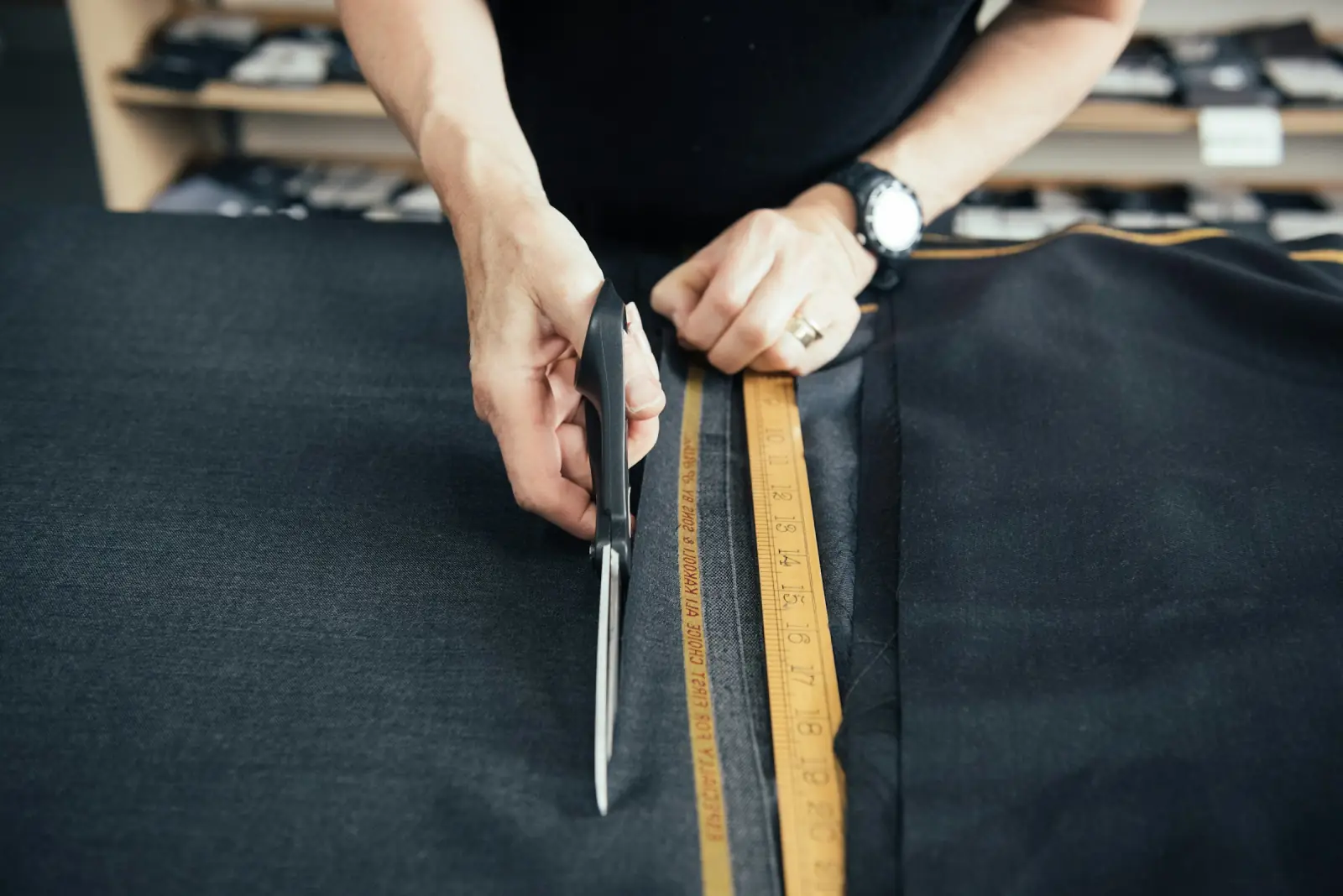
Each cut is recorded against the roll it came from. Once a started roll is down to 2 units or 10% of its original length, whichever is larger, it is tagged as a remnant. On a 40 m roll that is 4 m; on a 15 m roll it is 2 m. That tag is the list you want on a quiet Tuesday afternoon. Put those pieces in a chindi basket near the counter, price them as a bundle, or offer them to customers buying a matching plain for a dupatta or a kid’s outfit.
One rule saves a lot of confusion: if a cut was billed at the counter, the sale has already reduced stock, so don’t tick also remove from stock when you record it on the roll. Tick it only for fabric that left without a bill, such as a sample for a tailor. The details are in Stock adjustments & movements.
Let the cost average itself out
Fabric prices move with yarn prices, and the same cambric can cost you ₹180 a metre in March and ₹210 in July. Kapda Stock blends each purchase into a weighted-average cost. Say you have 30 m left at ₹180 and buy 50 m at ₹210. The new average is (5,400 + 10,500) ÷ 80 = ₹198.75 a metre. That average is what your margin reports use, so a price rise shows up in your numbers the day the stock arrives.
Billing at the counter: faster, and right the first time
Eid, Diwali and the wedding months all look the same at the counter: three customers waiting, one asking for a discount, one on the phone with her tailor, one who wants to pay half by UPI and half in cash. The billing screen has to keep up with that without the bill coming out wrong.
The POS screen was designed around that counter. Search by name or SKU, or scan, and tap to add. Prices on the tiles include GST, so the number a customer sees is the number they pay, and the tax is split out of each line for the bill. CGST and SGST, or IGST for an out-of-state GST customer, are worked out from the customer’s GSTIN, so nobody at the counter has to think about it.
Barcodes, even on fabric
Every item gets its own barcode automatically. You don’t buy or register anything. Print labels for the products you choose, and each one carries your shop name, the item, SKU, HSN, GST rate and the price per unit, for example ₹140.00 / MTR, plus a QR code. Stick one on the shelf edge or the roll’s end. At the counter, a phone or webcam reads it through Scan. If you buy a scanner gun, get a 2-D imager model; a basic 1-D laser scanner won’t read the QR.
Park the bill when the customer steps away
Fabric customers step away all the time, to call home, check a shade in daylight, or wait for a sister who is still choosing. Park bill (F6) saves the cart and clears the screen so you can serve the next person. Held bills (F7) brings it back when they return.
Take the money however it comes
- Split payments — ₹1,000 cash and the rest by UPI on one bill.
- UPI QR on the receipt — add your UPI ID in Invoicing settings and every receipt carries a Scan to pay via UPI code for the exact amount.
- 80 mm thermal receipts — printed straight from Chrome or Edge on a desktop, or through a PDF preview from a phone. Setup is in Printing & PDF.
- Part-payment on credit — collect what the customer has, and the rest goes onto their khata. More on that below.
When the power or the internet goes
In plenty of markets, the connection drops right when the shop is busiest. A POS screen that is already open keeps completing sales offline and syncs them when the connection returns, each one becoming a normal numbered invoice. Two things to know: printing an offline sale waits until it syncs, and the waiting sales live on that one device, so sync before closing up. We wrote a whole piece on billing when the internet goes down.
Udhaar without the awkward conversations
Credit is part of how local fabric stores keep customers. The families who buy a whole wedding’s worth of suits and sarees are rarely paying all of it on the day. The trouble is never the credit itself. It’s the diary it lives in.
In Kapda Stock, any unpaid part of a bill goes straight onto that customer’s ledger. When they pay, the money settles their oldest bills first. Say someone owes ₹3,000 from June and ₹2,000 from August and pays ₹4,000: June is cleared and ₹1,000 stays open on August. Everyone sees the same figures, and there’s nothing to argue about. You can also set a credit limit per customer. A Manager can’t bill past it; the owner or an Admin can override, and the override is recorded on the invoice. The full picture is in Payments & credit.
Collecting is the harder part, and the part most owners hate. Switch on the udhaar recovery ladder and it steps up on its own: a polite WhatsApp reminder at 7 days, a reminder with a UPI payment link at 15, and an automated voice call at 30. If a customer promises to pay by a date, record it and the reminders pause until then. One caveat worth knowing before you rely on it: WhatsApp only delivers these text reminders to customers who have messaged your number in the last 24 hours, so check the message history after the first run. We go deeper in Never chase udhaar again.
Restocking: let last month’s sales do the buying
Most local fabric stores buy by habit. The wholesaler in Surat or Delhi knows your “usual,” and you take it. The problem is that the usual was set two years ago, and your customers have moved on.
Two signals, used together
The first is a minimum stock level you set per item. Anything at or below it gets a red Low stock badge, and every morning at 9:00 AM you get an email and a WhatsApp message listing what’s running short. The second is a reorder suggestion worked out from the last 30 days of sales. If a rayon print sold 60 metres in 30 days, that’s 2 a day; with the default 7-day lead time and 5 m on hand, the suggestion is 7 × 2 − 5 = 9 metres. The formula is explained in Low stock & reorder.
The minimum is your safety net and the suggestion follows the season. Before a festival, check both. A fast seller can sit comfortably above its minimum and still need a large order. Our festive season planning guide walks through a full 90-day countdown.
Face the dead stock honestly
The dead-stock table on the Reports hub lists everything with stock but no sale in 90 days, the money locked up in it, and a suggested clearance discount that deepens with age: 20% from 90 days, 30% from 180, 40% from a year. It isn’t a pleasant list to read, but it’s the most useful one before a buying trip. There is also a one-click clearance broadcast on that screen. It sends a WhatsApp offer to all your customers immediately, with no confirmation step, so only press it when you mean it.
Get supplier bills in without retyping them
When the parcel arrives, Scan bill lets you photograph a printed supplier invoice. The line items land in a grid you check and correct, and one confirmation receives the stock, updates costs and credits the supplier’s ledger. It reads printed English bills well; handwritten kachha bills still need typing. Fabric billed in fractions, such as 12.5 m, is flagged for you to round. From there, every supplier has a ledger of what you owe.
Closing the day: ten minutes that save you the month
A good closing routine takes about ten minutes, and it catches problems while you still remember what happened.
- Count the cash and compare it with the day book. The day book builds itself from cash sales, cash collections, supplier payments and expenses. UPI and card are left out because they aren’t in the drawer.
- Sync any offline sales on the counter device before switching it off.
- Look at today’s credit. Who took goods on udhaar, and is anyone over their limit?
- Glance at the low-stock list so tomorrow’s phone call to the wholesaler is already written.
- Put the day’s remnants in the chindi basket, so they are on sale tomorrow and not forgotten in a corner.
You don’t even need to remember to close the books. Each day closes automatically at 11:55 PM IST. Once a week, the payment reconciliation section of the reports compares what your invoices say was paid by each method against the payments actually recorded, so a UPI payment entered as cash stands out.
Tailors, regulars and the local advantage
The one thing a big chain can’t copy is your relationships: the tailor two lanes over who sends his customers to you, and the families who have bought their wedding fabric from your shop for two generations. Good records make that advantage stronger, not weaker.
- Save the regulars as customers, with a phone number. Then “what did I buy last time?” takes seconds to answer, and matching a colour stops being guesswork.
- Reward repeat visits. A loyalty rate set in Invoicing settings earns points on every bill; one point is worth ₹1 at redemption.
- Know who is drifting away. The reports group customers into Champions, Loyal, At Risk and Lost based on how recently and how often they buy. A quick call to the At Risk list before a festival is worth more than any poster.
Moving off the diary without closing the shop
The fear is always the same: the shop can’t stop for a week while someone types in every product. It doesn’t have to. Start with your top sellers and the fabric you reorder most, set up the rest as it comes in, and bring over customer balances from the paper khata as opening balances. The order matters more than the speed. Our 30-day switching plan sets it out week by week.
On cost, the Growth plan is ₹349 a month or ₹3,499 a year before GST, with 3 users, 500 products and 3,000 invoices a month. A shop that stocks many colours of many fabrics can pass 500 items faster than it expects, so count your range first. Professional raises the limit to 10,000 products and 5 users. Both are compared in Plans & limits.
The shop your customers already trust, run on firmer ground
Local fabric stores don’t need to become chains to stay ahead of them. They need to know what’s on the shelf, bill cleanly, keep the khata honest and buy from real sales figures instead of memory. Do those four things and the parts you are already good at, the range, the advice and the relationships, go further.
Kapda Stock was built for this kind of shop: roll and remnant tracking, GST billing with a UPI QR, a counter that keeps working offline, a khata that follows up on its own, and reports that tell you what to reorder and what to clear. See the full feature list, or set up your shop and bill your first sale today. The next time someone walks in with a scrap of bottle-green cotton, you’ll know within seconds whether you still have it.
Frequently asked questions
How can a local fabric store keep track of fabric sold by the metre?
Set up loose fabric with the metre (MTR) unit and register each roll when it arrives. In Kapda Stock you enter roll lengths such as 25, 25, 20, record cuts against the roll, and remnants are flagged automatically once a started roll is down to 2 metres or 10% of its length, whichever is larger. Stock and bill quantities are whole numbers, so decide early how your counter handles part-metre cuts.
What should a small cloth shop look for in billing software?
Look for GST-inclusive pricing with CGST, SGST and IGST worked out automatically, barcode or QR scanning, split payments with a UPI QR on the receipt, 80 mm thermal printing, a customer khata for udhaar, and billing that keeps working when the internet drops. For fabric, ask specifically how it handles metres, rolls and remnants.
Can I keep billing if the shop’s internet goes down?
Yes, as long as the POS screen is already open. Kapda Stock saves sales on the device while offline and syncs them automatically when the connection returns, turning each one into a normal numbered invoice. Printing waits until the sale syncs, and unsynced sales exist only on that device, so sync before closing up. See Offline mode & sync.
How do I manage udhaar for regular customers?
Put unpaid amounts on each customer’s ledger rather than in a diary, set a credit limit for the customers who need one, and record payments against the ledger so they settle the oldest bills first. Kapda Stock can also send automatic reminders at 7, 15 and 30 days, and pause them when a customer promises to pay by a date.
Do fabric stores really need barcodes?
They help more than most owners expect. A label on the shelf edge or roll end lets any salesman add the right item and price in one scan, instead of searching through near-identical names. Kapda Stock gives every item a barcode automatically and prints labels with a QR code that a phone camera or a 2-D scanner can read.
How much does inventory and billing software cost for a fabric shop?
Kapda Stock’s Growth plan is ₹349 a month or ₹3,499 a year before GST, covering 3 users, 500 products and 3,000 invoices a month. Professional is ₹599 a month or ₹5,999 a year for 5 users and 10,000 products. See pricing for the full comparison.
See it working in your own shop
Set up a workspace in under a minute, or read the step-by-step guides in the docs.