How to manage quilted cotton fabric inventory in a fabric store
Quilted cotton is bulky, seasonal and easy to overbuy, and half your customers mean something different when they ask for it. Here is how to stock it, price it and keep it moving before the shelf fills up.
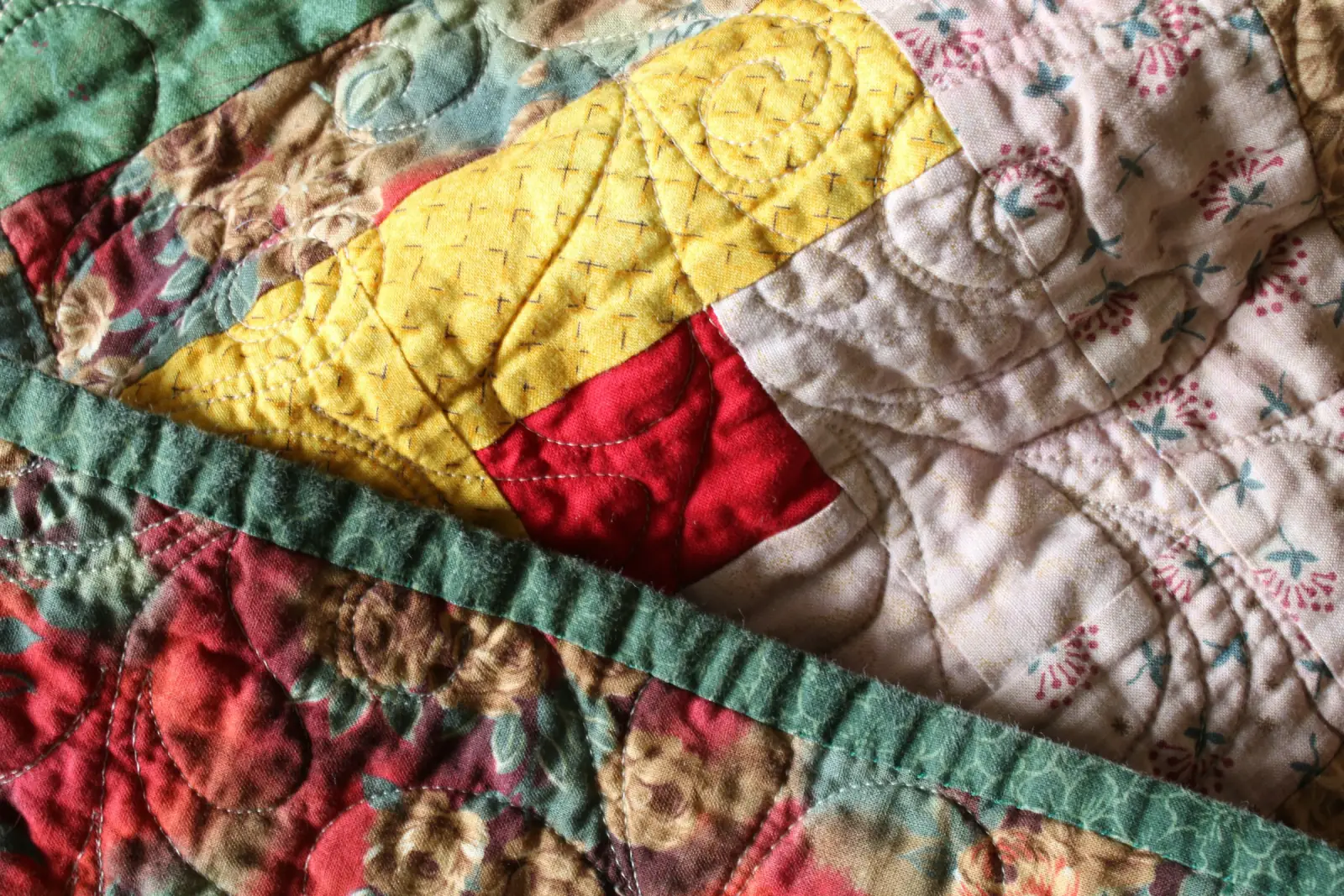
Photo: K Adams on Unsplash
Two customers walk in on the same October morning and both ask for quilted cotton. The first wants three metres of the thick, diamond-stitched stuff to make a razai cover and a winter jacket for her son. The second is a hobby quilter who wants half a metre each of six coordinating prints so she can cut them into squares. Same words, entirely different products, and the shop that sells both well has to stock, price and count them in different ways.
This guide is for fabric store owners who carry quilted cotton fabric, want to start, or are tired of it filling the back room every February. We cover what customers actually mean by the term, how to name and store it, how to work out what a metre of quilted fabric really costs you, how to handle stock you send out to be quilted, and how to plan around a season that arrives all at once and leaves just as fast.
Quilted cotton and quilting cotton are not the same thing
Start by getting the terms straight, for your staff as much as for your customers.
- Quilted cotton fabric is pre-quilted. It has three layers stitched together: a face fabric, a layer of wadding (batting) in the middle, and a backing. The stitching runs in a pattern — diamonds, straight channels, waves, or the onion-shaped ogee that many Jaipur-style pieces use. It’s sold by the metre and cut straight into jackets, razai and dohar covers, baby mats, bags, table runners and bedspreads.
- Quilting cotton is a flat, medium-weight, tightly woven 100% cotton, usually printed. It isn’t quilted at all. It’s what quilters buy to cut and piece together into their own quilts. It sells in small cuts across many coordinated prints.
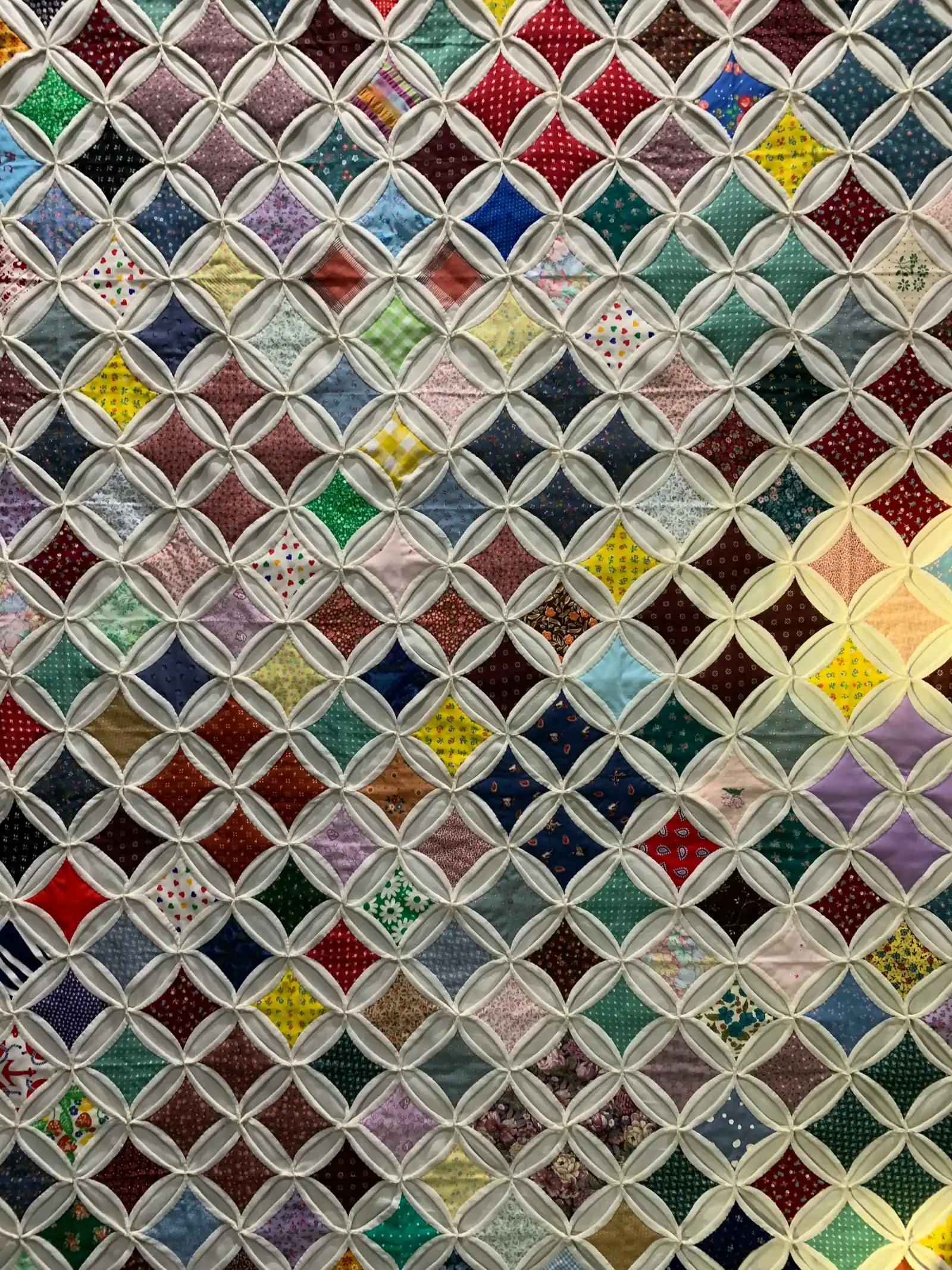
India has deep quilting traditions of its own: cotton-filled Jaipuri razai, Bengal’s kantha, where old saris are layered and stitched, sujani from Bihar and ralli from the western desert regions. Many of your customers grew up with these, so a short explanation at the counter lands easily. The practical point is simpler: if your shop sells both products, list them as separate categories. Otherwise your reports will blend a bulky winter fabric with a small-cut hobby fabric and tell you nothing useful about either.
Why quilted fabric is harder to stock than it looks
Most fabric problems are about counting. Quilted fabric adds a few of its own.
| Issue | Why it happens | What it costs you |
|---|---|---|
| Bulk | Three layers and wadding make a roll several times thicker than plain cotton | Shelf space that could hold far more metres of something else |
| Seasonality | Jackets, razai covers and winter bedding sell from October to January | Stock bought late misses the peak; stock bought deep sits for nine months |
| More versions | Same print in two stitch patterns and two wadding weights | A small range quickly becomes dozens of items to track |
| Damp and crushing | Wadding holds moisture and flattens under weight | Mildew smells and crushed loft that customers notice |
| Hidden cost | Face fabric, wadding, backing and stitching all add up | Selling price set on face-fabric cost alone, and margin quietly lost |
None of these is a reason to avoid the category. Quilted fabric usually carries a healthier margin per metre than plain cotton, and a customer buying for a razai cover often buys lining, thread and trims too. It just needs a bit more planning than the rest of the shop.
Naming and setting up every quilted item
A good item code for quilted fabric has to tell apart things that look almost identical on the roll: the print, the stitch pattern and the fill weight. Wadding is often sold by its weight per square metre, such as 100, 150 or 200 GSM, and customers who buy for a winter jacket will ask for it.
| Item | SKU | Unit |
|---|---|---|
| Quilted cotton, diamond stitch, 150 GSM, maroon floral | QLT-DIA-150-MARFL | MTR |
| Quilted cotton, channel stitch, 100 GSM, indigo | QLT-CHN-100-INDG | MTR |
| Quilted cotton, ogee stitch, 200 GSM, mustard block print | QLT-OGE-200-MUSBP | MTR |
| Quilting cotton print, green paisley | QC-PRT-GRNPSL | MTR |
| Quilting cotton bundle, 6 prints, pre-cut | QC-BDL-AUTUMN6 | SET |
In Kapda Stock, add metre-sold fabric from the + Add product form and choose MTR. Bulk import is faster for a large range, but every imported product comes in as pieces. Pre-cut bundles are the exception: sell them as a SET or PCS item at a fixed price. The unit, HSN code and GST rate can’t be changed once a product is saved, so check them before you press save. Products has the full list of fields.
HSN codes for quilted fabric
Flat quilting cotton usually falls under the woven cotton headings in chapter 52, such as 5208. Quilted textile products in the piece are generally classified under heading 5811 in chapter 58. Both are inside the textile range, 5001–6310, that every Kapda Stock workspace comes preloaded with. Classification depends on the exact product, so confirm the heading and GST rate with your CA before you add the item. HSN codes & GST rates explains how the code and rate flow onto every bill.
Know what a metre of quilted fabric really costs you
If you buy quilted fabric ready-made, your cost is the supplier’s rate plus freight. Many shops, though, make some of their own: they buy printed cotton, backing and wadding, and send it to a local karigar to be quilted. That usually gives a better price and lets you quilt whatever prints are selling. It also makes costing easy to get wrong, because the total is spread across four bills.
| Component | Cost per metre | Note |
|---|---|---|
| Printed face fabric | ₹120 | From your printing supplier |
| Backing cotton | ₹60 | Plain cotton, often muslin |
| Wadding, 150 GSM | ₹45 | Priced per metre of width used |
| Quilting charge | ₹35 | Paid to the karigar per metre |
| Subtotal | ₹260 | |
| Allowance for shrink and trim, 5% | ₹13 | Quilting pulls the fabric in slightly |
| Landed cost | ₹273 | The figure to price from |
Price from ₹273, not ₹120. It sounds obvious, yet shops that price quilted fabric off the face-fabric bill alone are common, and they are always puzzled why the category feels busy but doesn’t make money. Backing muslin is a good use of a line you already stock; we cover grades and widths in Muslin fabric by the yard.

Buying ready-made quilted rolls: what to check
If you buy quilted fabric ready-made, the rate per metre is only half the comparison. Two rolls at the same price can be very different value. Before you order, check:
- The stated wadding weight, and whether the roll feels like it. Squeeze it; thin fill is easy to hide under a busy print.
- Stitch density. Wider-spaced stitching is cheaper to make and lets the fill shift after a few washes.
- The backing. A flimsy backing is the first thing to tear on a jacket lining or a baby mat.
- The finished width. Quilting draws fabric in, so a 44-inch face fabric may end up noticeably narrower. Price per usable width, not per metre alone.
- A wash test. As with any cotton, wash a small piece before committing to a big order and see how it shrinks and whether the colour runs.
From landed cost to the price on the tag
In Kapda Stock the selling price you enter is the GST-inclusive price the customer pays, so work the tax in before you write the tag. Say you want to keep 40% of the pre-tax price as gross margin on that ₹273 metre. The pre-tax price is 273 ÷ 0.60 = ₹455. At a 5% GST rate that becomes ₹477.75, which you might round to ₹479. The arithmetic is simple. The discipline is doing it for every quilted item, because each stitch pattern and wadding weight has a different landed cost.
When a new lot arrives at a different rate, Kapda Stock blends it into a weighted-average cost, so the purchase cost on the product always reflects what the stock on hand actually cost. Recording the purchase is also where you update the selling price, if the new cost calls for it.
Help customers choose the wadding weight
Customers often don’t know what GSM means, but they know what they are making. A rough guide at the counter saves a lot of unrolling:
| Fill weight | Feels like | Good for |
|---|---|---|
| Around 100 GSM | Light and flexible | Bags, table runners, placemats, light jackets |
| Around 150 GSM | Soft padding with some warmth | Jackets for mild winters, baby mats, bedspreads |
| 200 GSM and above | Thick and warm | Winter jackets and vests, heavier razai and dohar covers |
Cutting rules for quilted fabric
Quilted fabric behaves differently at the cutting table. Cut stitching lines start to unravel at the edge, so many shops run a quick zigzag or tape along the cut end before handing it over. Thick layers also make a clean half-metre awkward to measure, and stock and bill quantities in Kapda Stock are whole units. Many shops simply sell quilted fabric in whole metres, with short pre-cut pieces for baby mats and bags sold as their own items.
Sending fabric out to a karigar without losing track of it
The moment fabric leaves the shop for quilting, a diary system breaks down. How many metres went out? Which prints? What was agreed? Has he been paid for the last lot? Kapda Stock’s Job work screen follows the whole round trip.
- Add the karigar with a name, phone number and skill.
- Issue a job: describe the material, for example 40 MTR maroon floral cotton for diamond quilting, enter the quantity, and agree the wages. There are separate fields for a weaving charge and a washing charge if you pay those too.
- Link the stock, if you want it tracked. Choose the fabric to deduct from stock now and the quilted product the finished metres should go into when they come back. Material is deducted in whole units, rounded up.
- Receive the finished goods when they come back. Enter the quantity actually returned and confirm the final wages. The finished metres are added to stock and the wages go onto the karigar’s ledger as owed.
- Pay wages against that ledger when you settle up. The karigar’s page shows every job, every charge and the balance after each payment.
Two habits make this work. Measure what comes back rather than assuming it matches what went out, because quilting draws fabric in. And give each job a due date, so a late karigar in the middle of November is something you see, not something you discover.
Storing bulky rolls so they still sell
Quilted fabric is the category where the stockroom most often wins over the shop floor. A few rules help:
- Keep rolls off the floor and out of sealed plastic in the monsoon. Wadding holds damp, and a musty roll is almost impossible to sell.
- Store rolls upright or on a rack, not stacked flat under other rolls. Weight crushes the loft, and flat quilting looks cheap.
- Display a cut sample, not the whole roll. A folded half-metre swatch of each print, with its SKU label, lets customers choose without you unrolling everything.
- Label both the roll and the swatch. Barcode labels print the item name, SKU, GST rate and price per unit, and the QR code on each label scans straight into the bill.
- Register each roll’s length when it arrives. Kapda Stock numbers every roll and flags it as a remnant once a started roll is down to 2 units or 10% of its length, whichever is larger. Short quilted remnants sell well as baby mats and bag panels. The details are in Stock adjustments & movements.

Planning around a short, sharp season
Most quilted fabric sells in a window of perhaps three to four months, and demand arrives with the first cold evening rather than on a date. That makes the usual reorder logic fall behind.
Kapda Stock’s reorder suggestions look at the last 30 days of sales. That’s good mid-season, but in the first week of October the last 30 days were September, when nobody bought quilted fabric, so the suggestions will be low. Before the season, look back instead. On the Reports hub, choose a custom range covering last October to January: the top products table shows the quantity, revenue and margin of each print you sold, and Export Excel gives you the list to plan from. Mid-season, Category performance for this month shows whether quilted fabric is earning its margin against the rest of the shop.
- Buy in two waves. Commit to part of the season’s range early, and hold back budget for a second order once three or four weeks of real sales show which prints and weights are moving.
- Set a longer lead time on the Reorder report during the season. If your karigar takes 10 days and your printer another week, the default 7 days is too short. The Reorder report accepts anything from 1 to 60 days.
- Give every product a minimum stock level. Then the 9:00 AM low-stock alert flags a fast-selling print before its last roll goes.
Our seasonal planning guide for fall fabric walks through the whole autumn-to-winter calendar, including when to start buying.

Selling quilting cotton to quilters
Hobby quilting is a smaller business in most Indian towns, but it’s growing, and quilters are some of the most loyal customers a fabric shop can have. They buy small quantities of many prints, they come back for more of the same collection, and they tell each other where to shop.
- Stock in collections. Six to ten prints that work together — a paisley, a small floral, a stripe, two tone-on-tone solids — sell better than twenty unrelated designs.
- Sell pre-cut bundles as a fixed-price SET item. They save cutting time at the counter and make a good gift.
- Keep solids deep. Plain colours are the quilter’s background and sell steadily across every collection.
- Reward regulars. A loyalty rate set in Invoicing settings earns points on every bill, redeemable at ₹1 a point.
After the season: clear, carry over or cut into something else
By February, whatever quilted fabric is left will sit for eight or nine months, taking up space and tying up money. Decide what to do with it deliberately rather than letting it drift into the back room.
The dead-stock table on the Reports hub lists everything with stock but no sale in 90 days, the value locked up in it, and a suggested discount of 20%, 30% or 40% depending on how long it has sat. Inventory valuation shows the value of stock on hand by category, which is the number to look at when you ask whether quilted fabric earns its shelf space.
- Carry over classic colours and plain channel-stitched stock; they will sell again next winter.
- Clear trend prints now, with a time-limited coupon code set up in Offers & promotions.
- Convert short ends into baby mats, laptop sleeves or bag panels through the same karigar, and sell them as pieces.
A category that rewards a little planning
Quilted cotton isn’t difficult. It is bulky, seasonal and costed across several bills, and each of those things punishes a shop that runs on memory. Separate the two products, name every version clearly, price from the landed cost, follow each job to the karigar and back, and plan the season from last year’s numbers instead of the last 30 days.
Kapda Stock was built with this kind of shop in mind, with roll and remnant tracking, job work with wages, category reports and GST billing in one place. If you are setting up for the first time, How local fabric stores can manage inventory and billing covers the basics. See the full feature list, or start your shop’s workspace before the cold weather does.
Frequently asked questions
What is the difference between quilted cotton and quilting cotton?
Quilted cotton is pre-quilted fabric: a face fabric, a layer of wadding and a backing stitched together, sold by the metre for jackets, razai covers and baby mats. Quilting cotton is a flat, medium-weight printed cotton that quilters cut and piece into their own quilts.
What is quilted cotton fabric used for?
Quilted cotton fabric is used for winter jackets and vests, razai and dohar covers, baby mats, bags, laptop sleeves, table runners, placemats and bedspreads. Its padding gives warmth and structure without the work of layering and stitching at home.
How should a fabric store price quilted fabric it makes itself?
Add up the cost of the face fabric, backing, wadding and quilting charge for each metre, then add a small allowance for shrinkage and trimming, often around 5%. Price from that landed cost, not from the face fabric alone, or the category will look busy without making money.
How do I track fabric sent to a karigar for quilting?
Record it as a job: the karigar, the material and quantity, the agreed wages and a due date. In Kapda Stock the Job work screen can deduct the material from stock when issued, add the finished quilted metres when received, and keep a ledger of wages owed and paid.
When should I buy quilted fabric for the winter season?
Well before demand starts, usually by early autumn, because quilting and printing take time and the season arrives suddenly. Use last year’s sales for October to January to size the first order, and hold back part of the budget to reorder the prints that sell fastest.
See it working in your own shop
Set up a workspace in under a minute, or read the step-by-step guides in the docs.