Garment hubs in India: a buying guide for readymade clothing shops
A fabric hub sells you metres. A garment hub sells you size sets, and that changes everything about how you buy. Here is India’s readymade garment map, hub by hub, with the buying habits that protect a small shop’s margin.
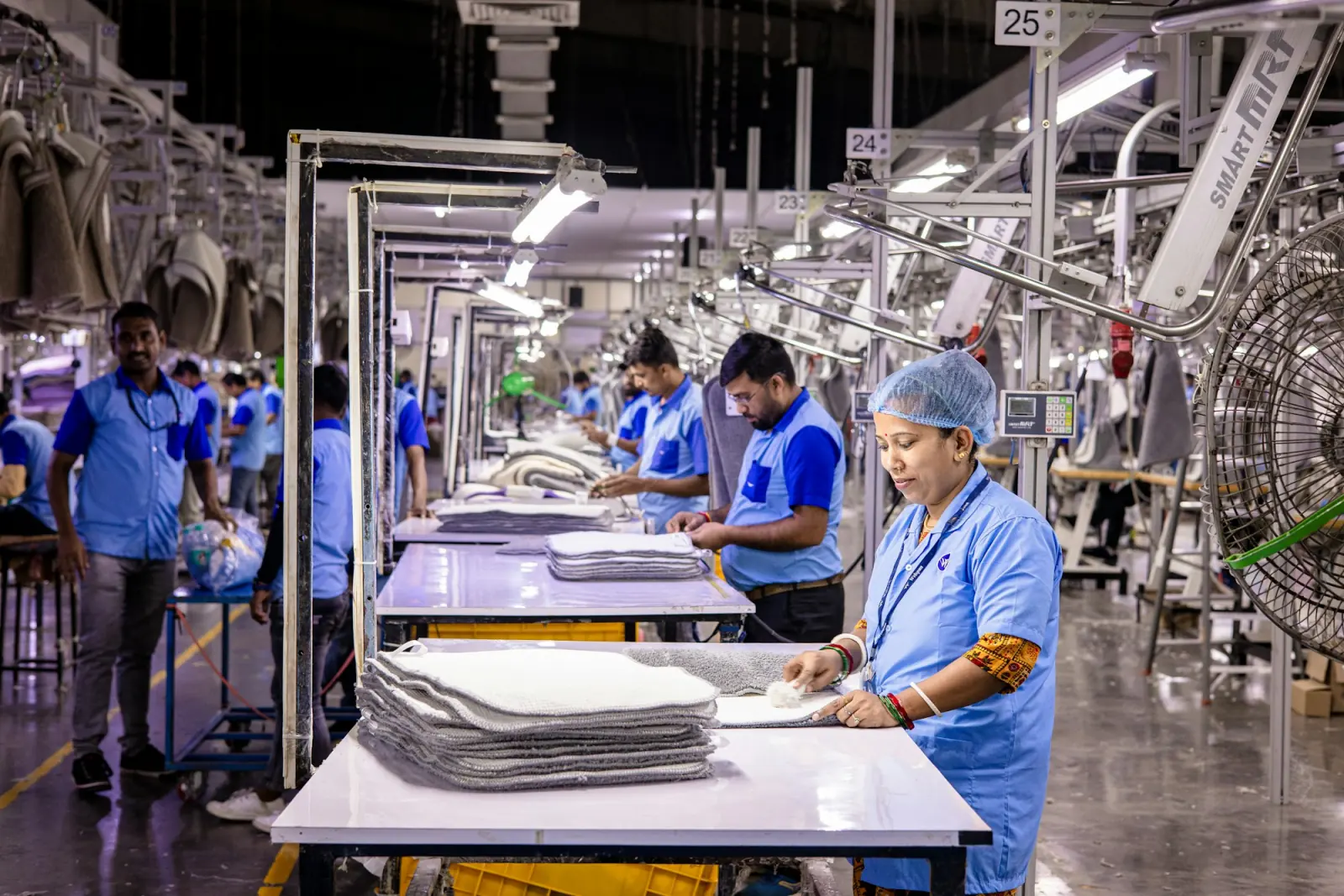
Photo: EqualStock on Unsplash
Ask a garment shop owner in Jammu where their best-selling kurtis come from and you will usually get two answers. The first is a city: Delhi, Jaipur, Surat. The second, if you wait a moment, is a complaint. “The XLs came back short again.” Or: “Half the set was mediums nobody wanted.” Or the classic: “The rate was good, but by the time it reached here, the colour was already old.”
That second answer is the real subject of this guide. India has some of the most productive garment hubs in the world, and almost every readymade clothing shop in the country buys from at least one of them. Knowing which hub makes what is the easy part. The harder part is buying in a way that suits a retail shop, because the hubs sell in sets, ratios and bundles that were designed around the wholesaler’s convenience, not yours.
So this is two guides in one. First, the map: the clusters that actually stitch India’s readymade clothes, what each does best and what to watch for when you buy there. Then the part most hub guides skip: how size sets, credit terms and seasonal timing play out once the bundle is opened in your shop, and how to keep track of it all without a second notebook.
A garment hub is not a fabric hub
It is easy to blur the two. Surat weaves enormous quantities of polyester fabric, Bhilwara makes suiting, Erode trades cotton cloth. We covered those in our guide to India’s textile manufacturing hubs. A garment hub is the next step down the chain: the place where that fabric is cut, stitched, finished, tagged and packed into something a customer can wear out of your shop.
The distinction matters for a retailer because the unit of buying changes. Fabric is sold by the metre or by the thaan, and you can sell any length of it. A garment is sold by the piece, but bought by the set: one of each size, or a fixed ratio such as 1-2-2-1 across S, M, L and XL. You cannot sell a medium to a customer who needs a large. Every buying decision at a garment hub is really a bet on which sizes and colours your customers will ask for.
There is a second split worth knowing. Some hubs mostly make clothes for export, and what reaches the domestic market is surplus, overruns or rejected lots. Others make almost entirely for Indian buyers and sell through wholesale markets and weekly haats. The two behave very differently on price, sizing and consistency.
India’s garment hubs at a glance
| Hub | State | Best known for | Suits a shop that sells |
|---|---|---|---|
| Tiruppur | Tamil Nadu | Knitted T-shirts, innerwear, nightwear, kidswear, export surplus | Everyday basics in volume |
| Gandhi Nagar and Tank Road | Delhi | Jeans, shirts, kidswear, western and ethnic wear in every price band | A wide family range |
| Metiabruz and Howrah haats | West Bengal | Woven kidswear, men’s shirts and trousers, low-cost ladies’ wear | Value-priced, fast-turning stock |
| Ulhasnagar | Maharashtra | Jeans and casual trousers | Denim for men and young buyers |
| Ballari | Karnataka | Jeans for the mass market | Budget denim |
| Ludhiana | Punjab | Sweaters, thermals, jackets, hosiery | Winterwear |
| Surat | Gujarat | Sarees, dress material, readymade kurtis and ethnic sets | Women’s ethnic wear |
| Jaipur | Rajasthan | Printed cotton kurtis, suits, nightwear | Cotton ethnic and casual wear |
| Bengaluru and the NCR export belt | Karnataka, Delhi NCR | Branded export production; surplus reaches local markets | Shops willing to sort mixed lots |
No table settles where you should buy. A shop in Anantnag selling to college students has different needs from a family store in Kathua. Use it as a starting point, then judge each hub on the three things that decide your margin: the landed cost per piece, how well the sizes match your customers, and how fast you can get a repeat when something sells.
Tiruppur: India’s knitwear capital
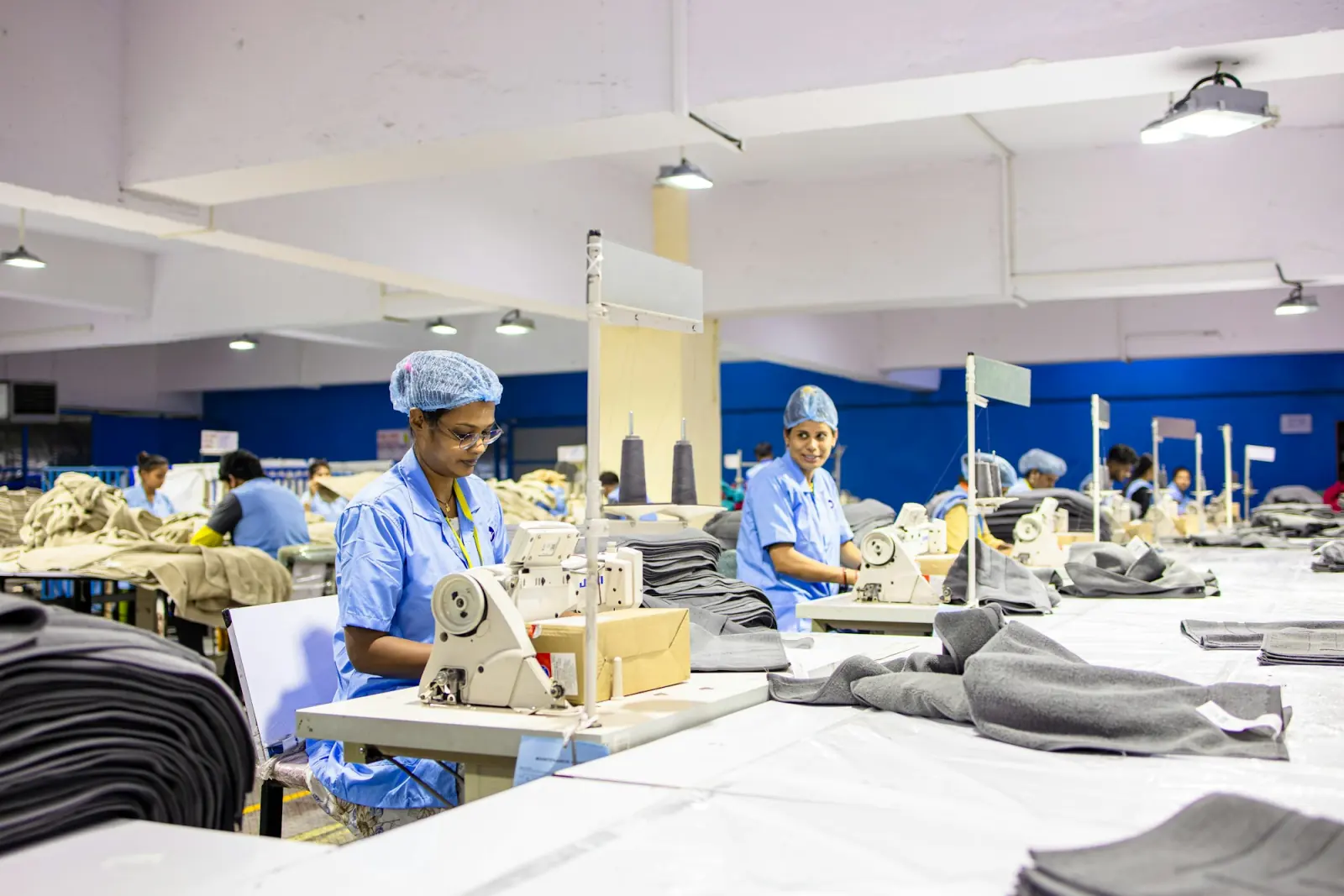
If a T-shirt in an Indian shop was knitted rather than woven, there is a good chance it passed through Tiruppur. The town and the surrounding district are the centre of India’s cotton knitwear trade. Exporters’ bodies put Tiruppur’s knitwear exports at roughly ₹40,000 crore in 2024-25, a little over half of all of India’s knitwear exports. Behind those export figures sits a huge domestic business in T-shirts, vests, briefs, leggings, nightwear and children’s clothes.
Buying from Tiruppur: what to watch
- Know your GSM. Knitted fabric is sold by weight per square metre. A 160 GSM tee and a 220 GSM tee look the same on a photo and feel completely different in the hand. Ask for the figure and keep a sample of every quality you buy.
- Ask about shrinkage. Cheap, unsanforised cotton knits can lose a size in the first wash. One angry customer with a shrunken T-shirt costs you more than the margin on the whole bundle.
- Export surplus is a mixed blessing. Surplus lots can be excellent value, but sizing often follows US or European charts, so an export “M” may fit like an Indian “L”. Sizes in a lot can also be uneven. Count and size-check every bundle before you price it.
- Distance is the hidden cost. For a shop in the north, freight and transit time from Tamil Nadu add up. Tiruppur works best for steady basics you reorder on a schedule, not for fashion items that need a quick repeat.
Delhi: Gandhi Nagar, Tank Road and the NCR belt
For most shops in Jammu & Kashmir, Himachal, Punjab and much of the north, Delhi is the first garment hub they ever buy from, and many never need another. It is close, it has everything, and the wholesalers there are used to small retailers who arrive by overnight train and leave the same evening with a few bundles.
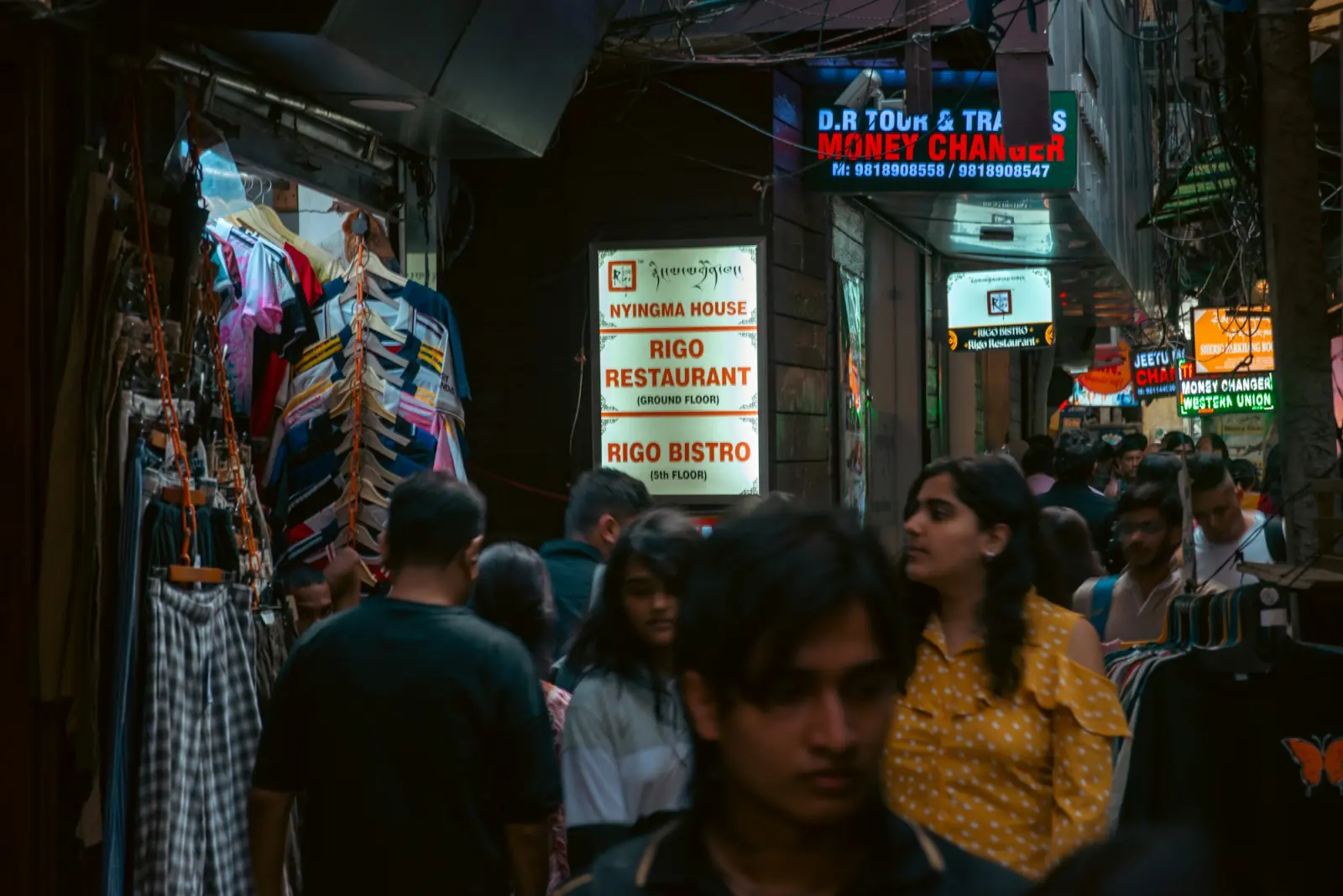
Gandhi Nagar, across the Yamuna in East Delhi, is the big one. It is commonly described as one of Asia’s largest readymade garment markets, with listings putting it at around 15,000 shops. Jeans, shirts, T-shirts and kidswear dominate, at every price from the cheapest to the respectable. Most shops there close on Monday, so check before you book a ticket. Tank Road near Karol Bagh is the place for jeans and western wear, with many units making in the lanes behind their showrooms. Ethnic wear, lehengas and wedding outfits are better found around Chandni Chowk, while Sadar Bazaar sells hosiery and accessories at low wholesale rates.
Around the city, the NCR export belt in Okhla, Noida and Gurugram makes garments for international brands. You won’t usually buy from these factories directly, but their surplus regularly finds its way into Delhi’s wholesale lanes, which is where some of the best-value branded overruns turn up.
Kolkata: Metiabruz and the haat system
Metiabruz, on the southern edge of Kolkata, is probably the most important garment hub most retailers outside eastern India have never heard of. It is generally described as the largest producer of garments for the domestic market and the biggest maker of woven children’s clothing in the country. Thousands of small units there, many of them family workshops, stitch kids’ frocks, boys’ shirt-and-shorts sets, men’s shirts and trousers, and low-cost ladies’ wear.
Much of it is sold through haats: wholesale markets that open on set days and fill whole streets with traders. The best known, the Mangla Haat near Howrah, has traditionally run on Tuesdays. Traders come from across Bengal, Bihar, Odisha, Assam and the north-east to buy in bulk at prices that are hard to match anywhere else. Market days and locations do change, so confirm with a trader you know before you travel.
The trade-off is consistency. Finishing, stitching quality and sizing can vary from one workshop to the next, and sometimes within the same bundle. For kidswear, where children outgrow clothes in months and parents are price-conscious, that is often an acceptable bargain. For a premium shop, it means sorting every piece before it reaches the rack.
Ulhasnagar and Ballari: the jeans belt
India makes most of its domestic-market jeans in a handful of clusters. Ulhasnagar, in Thane district near Mumbai, is the best known: hundreds of units, a jeans street lined with wholesalers, and buyers from Maharashtra, Gujarat, Madhya Pradesh and beyond. Much of its denim fabric comes from mills in Bhilwara and Ahmedabad. Ballari in Karnataka is the other big name, with hundreds of small units supplying budget jeans across the south and well beyond.
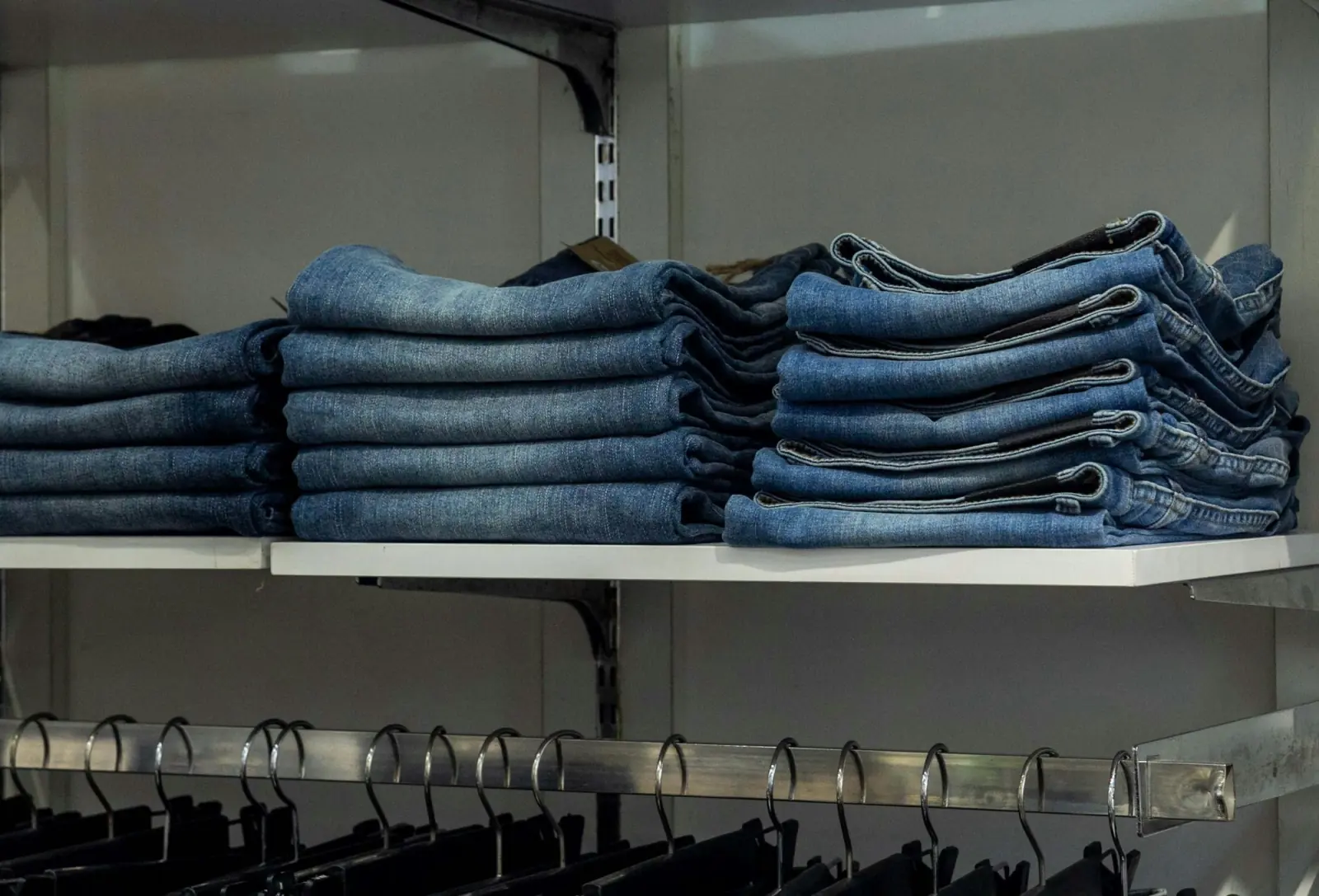
Jeans are where size management gets hardest. A single style in waist sizes 28 to 36 is already five lines. Add two washes and two fits and you are looking after twenty. Wholesalers usually sell jeans in a fixed waist ratio, and the ratio rarely matches your customers. If your town buys mostly 30s and 32s, the 28s and 36s in every bundle will slowly fill your back shelf.
Ludhiana: where India’s winter is stitched
For a shop in the Kashmir Valley, Ludhiana matters more than any other hub on this list. The city has been India’s hosiery and woollen knitwear centre for decades: sweaters, cardigans, thermals, mufflers, caps, jackets, tracksuits. Much of what Indians wear through the cold months is knitted on Ludhiana’s machines.
Winterwear is unforgiving on timing. Ludhiana manufacturers plan their production months ahead, and the good designs at the good rates go to buyers who order early. A shop that waits until the first snowfall to place its order gets the leftovers at full price. A shop that orders too much is left holding heavy jackets through a warm March. The answer is last season’s numbers: which sizes and styles actually sold, and which were still on the shelf when the season ended. Our festive season inventory guide walks through planning a season from sales history, and the same method works for winter.
Surat, Jaipur and Ahmedabad: the ethnic-wear corridor
Western India supplies a large share of the country’s women’s ethnic wear. Surat is famous for sarees and dress material, but its textile markets now carry a large and growing range of readymade kurtis, kurti sets, gowns and lehengas, often at very sharp prices thanks to the city’s own fabric production. Jaipur is the home of the printed cotton kurti: block and screen prints, Sanganeri patterns and comfortable summer suits, along with cotton nightwear. Ahmedabad comes into its own before Navratri, when chaniya cholis and festive sets fill its markets.
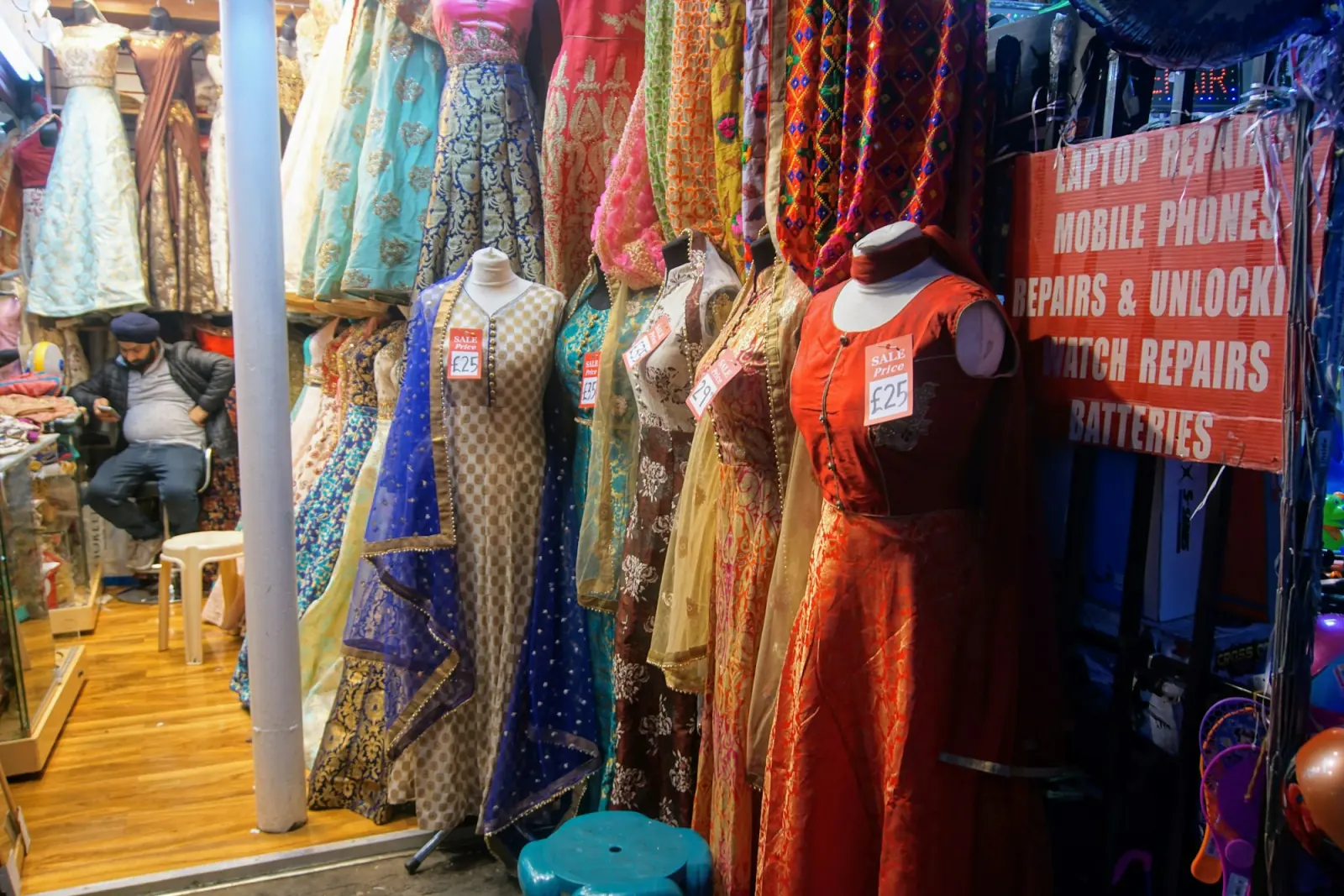
Ethnic wear has its own buying risks. Designs date quickly, especially anything that looks like last year’s wedding trend. Catalogue sets often come with fixed colour assortments: you take the six colours in the catalogue, not the three you know will sell. And returns are rarely possible once you have cut the bundle. The best defence is buying smaller quantities more often, keeping a close eye on which designs sell through, and putting slow movers on offer before the season closes.
How buying actually works in a garment hub
Every hub has its own habits, but a few rules hold almost everywhere. Knowing them before you walk into a wholesaler’s shop saves money and arguments.
- Sets, not pieces. Most styles are sold as a full size set (one each of S, M, L, XL) or in a ratio such as 1-2-2-1. Breaking a set is possible with some wholesalers, usually at a higher rate per piece. Ask what the set contains before you agree a price.
- Minimum orders are negotiable, rates less so. A wholesaler who wants your custom can often drop the minimum from 10 sets to 5. The rate per piece is where they hold firm, especially for a first-time buyer.
- Credit is earned. New buyers usually pay cash or UPI on the spot. After a few trips, wholesalers offer credit, typically 30 to 60 days. That credit is valuable, but only if you track it. A forgotten payable damages the relationship faster than a late one. Our piece on keeping credit under control covers the customer side of udhaar; the supplier side deserves the same discipline.
- Get a proper GST bill. Without a tax invoice you cannot claim the input credit, and you have no paper trail if a bundle turns up short. Take the GSTIN on every bill.
- Freight and transit have their own paperwork. Bundles usually travel by transport company, against a bilty or LR. Consignments above ₹50,000 need an e-way bill, normally raised by the supplier. Count bundles at delivery and note any damage on the LR before you sign.
- “No return, exchange for defects only.” This is the default in most hubs. Check bundles on receipt and report defects within the window the wholesaler gives you, usually a few days.
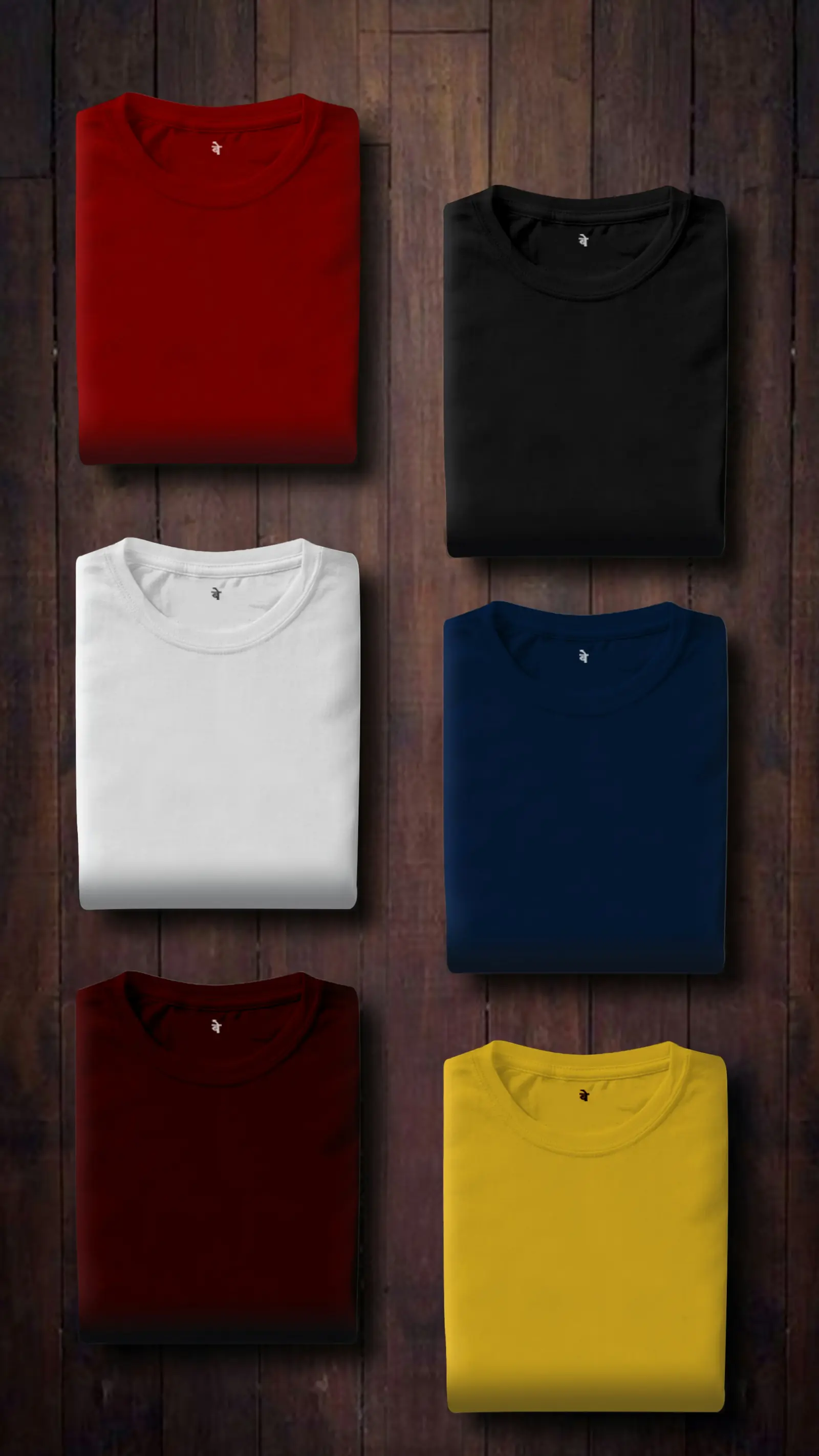
The size-set problem: why a full rack still loses sales
Most garment shops have lived through this one. You buy 10 sets of a kurti in four sizes: 40 pieces, ten of each. Three weeks later the rack still looks healthy, so nobody worries. But look at what is actually left:
| Size | Bought | Sold | Left | What it means |
|---|---|---|---|---|
| S | 10 | 3 | 7 | Slow. Too many in the set for this shop. |
| M | 10 | 10 | 0 | Sold out. Every customer who wants M walks out. |
| L | 10 | 9 | 1 | One left. Gone by the weekend. |
| XL | 10 | 4 | 6 | Steady but slow. |
| Total | 40 | 26 | 14 | The rack looks a third full. It is mostly the wrong sizes. |
Fourteen pieces on the rack, and the size most customers want is gone. This is a broken size set, and it is one of the quietest ways a garment shop loses money. The shop doesn’t lose the cost of the kurti; it loses every sale that walked out while the M was missing, and it often marks down the leftover S and XL at the end of the season.
There are only two real defences. The first is to buy closer to your own size curve: if your M and L outsell S and XL two to one, ask for a 1-2-2-1 ratio, or top up M and L with loose pieces. The second is to see the break the day it happens, not at stocktaking. That means counting stock by size and colour, not just by style. A register that says “Kurti, blue: 14” cannot tell you that mediums ran out on Tuesday.
Turning hub buying into a system at your shop
The hubs will keep selling in sets and ratios; that won’t change. What you can change is how quickly your shop learns from each bundle. Here is how Kapda Stock, the billing and inventory software we build for textile and clothing businesses, handles each step; the habits are worth copying even on paper.
Count stock by size and colour
In Kapda Stock, every stock line has its own barcode, its own stock count and its own minimum level, and sales, purchases and labels all work at that level. For a garment shop, the practical way to use that is to add each size and colour as its own product, with an SKU that says exactly what it is: KRT-BLU-M, KRT-BLU-L and so on. A sale of a blue M then reduces blue M, not some vague total, and searching “KRT-BLU” brings up every size side by side. Bulk import from a spreadsheet makes this quick for a whole bundle, and the products guide explains each field.
Label every piece before it reaches the rack
A bundle unpacked without labels is a bundle you will bill by guesswork. Print barcode labels that carry the product name and SKU, so the size is right there on the tag, along with the HSN, the GST rate and the GST-inclusive price. At the counter, your staff scan with a scanner gun or a phone camera, and the right size comes off stock.
Catch the missing size before the customer does
Give your fast sizes a minimum stock level, say 3 for mediums and larges, and 1 for the sizes that move slowly. Every morning at 9 AM the low-stock alert reaches the owner by email and WhatsApp, listing each item at or below its minimum. Reorder suggestions use the last 30 days of sales, and because each size is its own stock line, the medium that sold out first is the one flagged for your next order, while the slow XLs stay off the list.
Order with purchase orders, receive with a GRN
Record each wholesaler as a supplier, with phone and GSTIN. Raise a purchase order for what you agreed, and when the bundles arrive, receive the goods against it. Stock goes up at the agreed rate, your average cost updates, and the amount moves into what you owe that supplier. When the 45-day credit comes due, the payable is already sitting there; nobody has to dig through a diary.
Let the numbers decide which hub earns a repeat
After a season, the useful questions are simple. Which categories made money, not just turnover? Which handful of styles drove most of the revenue? Category performance shows revenue, cost and margin for each category, and the ABC analysis ranks every product so you can see your “A” items, the few that bring in most of your sales. If your best margins keep coming from one wholesaler’s kurtis and your worst from another’s jeans, you have your next buying list.
Clear leftovers before they become dead stock
The odd sizes and slow colours will always pile up. The Reports hub lists dead stock, anything with stock and no sale in 90 days or more, so you can act while it still has value. Run a clearance through offers and coupons, bundle the odd sizes, or move them before the next season’s bundles arrive. Customer exchanges are part of garment retail too, and a return against the original bill puts the piece back into the right size and issues a credit note, without editing the original invoice.
Get GST right at the ₹2,500 line
Since 22 September 2025, readymade garments sold at up to ₹2,500 a piece attract 5% GST, and those above ₹2,500 attract 18%. That line runs right through most shops: a ₹1,200 kurti is at 5%, a ₹3,800 lehenga at 18%. Each product in Kapda Stock carries its own HSN code and GST rate, with garments under chapters 61 (knitted) and 62 (woven). Set the rate your CA confirms for each product, and take extra care with items priced close to ₹2,500, where a discount can change the rate that applies.
A checklist for your next buying trip
- Before you leave, check what is broken. List the styles with missing sizes and the items that reached minimum stock. Those come first.
- Check what didn’t sell. Look at dead stock and C-class items. Don’t buy more of a style that is already sitting on your shelf, however good the rate.
- Carry your size curve. Know roughly how your sales split across S, M, L and XL, and ask each wholesaler for a ratio that matches it.
- Photograph and note every quote. Piece, rate, set contents, wholesaler’s name and number.
- Agree credit terms in writing. Days of credit, defect exchange window, freight charges.
- Take a GST bill for everything and check the GSTIN before you leave the shop.
- On delivery, count against the purchase order before you sign for it. Note shortages and damage on the LR.
- Label everything before it touches the rack. No label, no sale.
The hub sets the rate; your shop sets the margin
Every garment shop in India buys from the same few hubs, often from the same wholesalers, at roughly the same rates. The rate is rarely what separates a shop that grows from one that struggles. What separates them is what happens after the bundles arrive: whether sizes are counted, whether broken sets are spotted early, whether slow colours are cleared in time, and whether suppliers are paid on the day they were promised.
That is the work Kapda Stock was built for. If you sell readymade clothes, see how it handles sizes, labels and exchanges on our garment shop billing software page, browse the full feature list, or compare plans. If you are moving over from a register or another app, the 30-day switching plan shows how to do it without disrupting the counter. And when you are ready, set up your shop before your next buying trip, so the next bundle you open is counted by size from day one.
Frequently asked questions
Which is the biggest readymade garment market in India?
Gandhi Nagar in East Delhi is usually described as the largest readymade garment wholesale market in India and one of the largest in Asia, with around 15,000 shops by common estimates. For production, Tiruppur leads in knitted garments and Metiabruz in Kolkata is generally described as the largest producer of garments for the domestic market.
Where can I buy kids wear wholesale in India?
Metiabruz and the haats around Howrah in West Bengal are the best-known source of low-cost woven kidswear. Tiruppur is strong in knitted children’s clothing such as T-shirts, rompers and nightwear, and Gandhi Nagar in Delhi has a wide kidswear range for shops in the north. Compare landed cost, including freight, rather than the wholesale rate alone.
Is export surplus from Tiruppur good for a retail shop?
It can be excellent value, but check it carefully. Export pieces often follow US or European size charts, so an export medium may fit like an Indian large, and sizes within a lot can be uneven. Size-check and count every bundle before pricing, and buy surplus for basics rather than for styles you need to repeat quickly.
What GST applies to readymade garments?
From 22 September 2025, readymade garments with a sale value of up to ₹2,500 per piece attract 5% GST, and those above ₹2,500 per piece attract 18%. Garments fall under HSN chapters 61 (knitted or crocheted) and 62 (not knitted). Confirm the exact rate for each product with your CA, especially for items priced close to the ₹2,500 line.
How can a garment shop avoid broken size sets?
Buy closer to your own size curve, for example a 1-2-2-1 ratio if mediums and larges outsell the other sizes, and track stock by size and colour rather than by style. In Kapda Stock, add each size as its own product with its own SKU and minimum stock, and the daily low-stock alert flags the size that is running out, so you can reorder before the sale walks out.
See it working in your own shop
Set up a workspace in under a minute, or read the step-by-step guides in the docs.