The accounts payable process for a small business, step by step
Accounts payable sounds like something only companies with finance teams worry about. In a cloth shop it is simpler and more urgent: it is every metre you bought on credit and haven’t paid for yet. What follows is the whole process, written for a shop where the owner is also the accounts department.
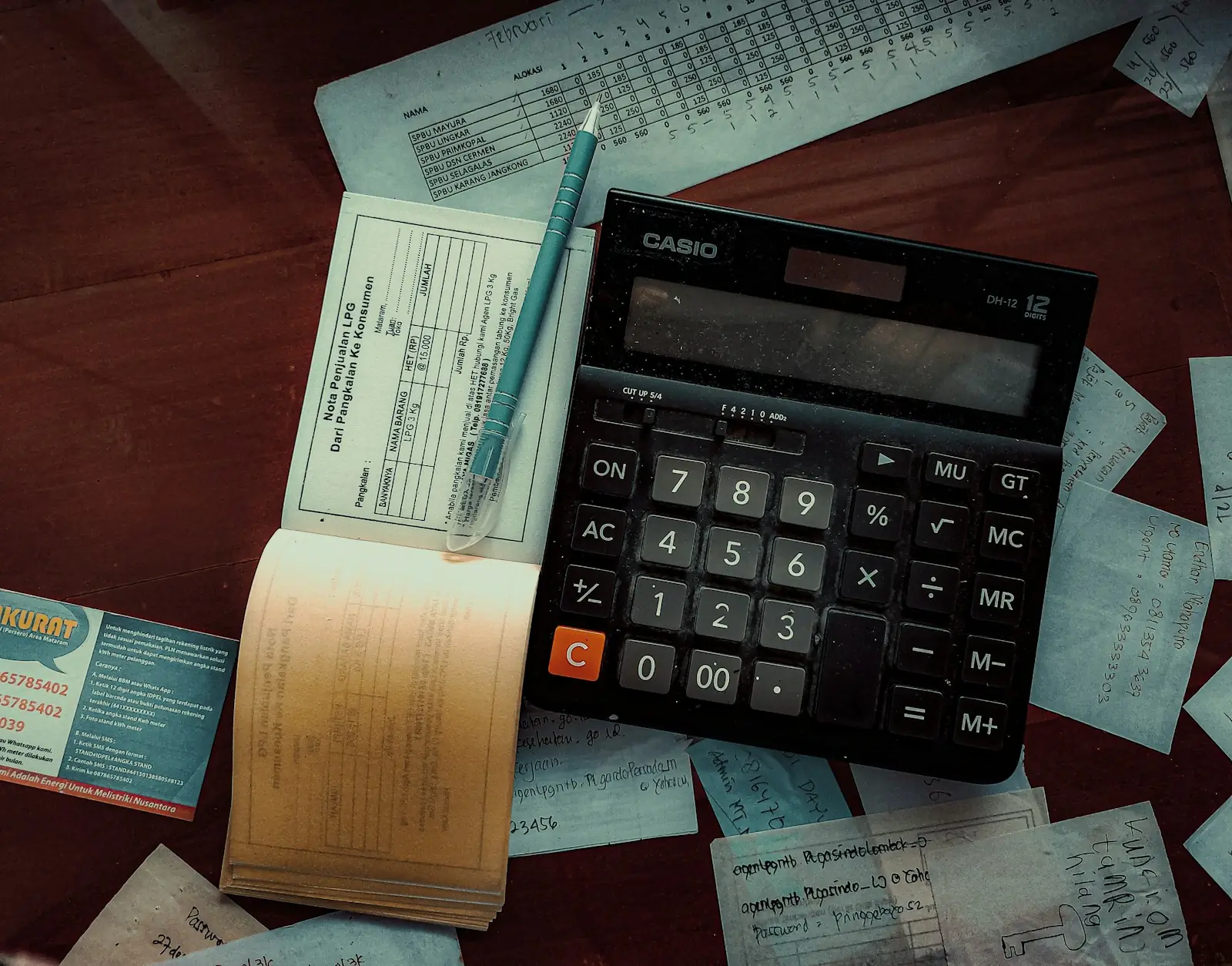
Photo: FIN on Unsplash
Most textile shops in India run on supplier credit. The mill in Surat gives sixty days, the hosiery unit in Ludhiana gives thirty, the local wholesaler in the bazaar lets the balance roll for “whenever, bhai”. That credit is what lets a small shop stock forty shades of cotton before a single metre is sold.
It is also a debt. Every bale on credit is a promise to pay, and the way a business keeps track of those promises is called accounts payable. Big companies have a team for it. In a small shop it is usually the owner, a son or daughter who “handles the computer”, and a munim who has been with the family for twenty years.
This guide walks through the accounts payable process the way it actually runs in a small shop: the steps, the papers that go with each, where money leaks, and how to keep the whole thing in order without hiring an accountant. Where it helps, we show how Kapda Stock handles each step, and we are clear about where it stops.
What accounts payable means in plain words
Accounts payable is the total you owe to suppliers for goods and services you have already received but not yet paid for. If you bought ₹3 lakh of suiting on credit and have paid ₹1 lakh, your payable to that supplier is ₹2 lakh. Add that up across every supplier and you have the accounts payable figure on your balance sheet.
It is the mirror image of udhaar. Your credit customers are your receivables: money coming in. Your suppliers are your payables: money going out. Most shop owners watch receivables closely, because chasing customers hurts. Payables get less attention because suppliers usually wait politely, until one day they don’t. If you have already sorted out the customer side, our guide to never chasing udhaar again covers it; this article is the other half.
The accounts payable process, step by step
In a textile shop, the purchase-to-payment cycle has seven steps. Some take seconds. Skipping any of them is where problems start.
1. Order
Someone decides what to buy and agrees it with the supplier: design, shade, quantity, rate and credit period. In many shops this happens on a phone call and nothing is written down. That is the root of half of all later disputes. “You said ₹118 a metre.” “No, ₹124, the price went up.” Write the order down, even if it is a WhatsApp message you send back to the supplier saying what you understood.
Better still, raise a purchase order. In Kapda Stock a PO lists each product with quantity and rate, gets a number like PO-00012, and can be shared as a PDF straight from your phone with the message *Purchase order attached. Kindly confirm.* When the supplier confirms, you mark it Confirmed. Now the agreed rate exists somewhere other than two people’s memories.
2. Dispatch and transport
The supplier sends the goods, usually through a transporter, with a lorry receipt or bilty and often an e-way bill for consignments above ₹50,000. Keep the bilty. If a bale goes missing or arrives wet, it is your evidence against the transporter, and it tells you whether a delay is the supplier’s fault or the road’s.
3. Receive and count
When the goods arrive, count them before they go on the shelf. Open the bale. Check thans against the packing list, measure a few, look at the shades in daylight. This is the step most often skipped on a busy day, and it is the step that decides whether the bill you pay later is the right one.
In Kapda Stock, receiving is the Receive goods (GRN) action on the purchase order. It adds the stock at the PO rates, re-averages each product’s purchase cost, and credits the supplier’s ledger with the value received, all in one step. If you buy fabric by the roll, you can import the supplier’s packing list first, and the check flags rolls that are *Short by N against the bill* before anything is added to stock.
4. Receive the bill
The tax invoice may arrive with the goods, before them, or a week later on WhatsApp. Put every bill in one place on the day it arrives. One tray, one email folder, one person. In Kapda Stock you can photograph a printed bill with Scan bill, which reads the lines on your phone and lays them out for you to check.
5. Check the bill
Match the bill against the order and the delivery. Same supplier and GSTIN? Same quantities as what arrived? Same rates as what was agreed? GST at the right rate, and split correctly as CGST and SGST for a supplier in your state, or IGST for one outside it? Freight and packing charged only if you agreed to pay them? If anything is off, the bill goes into a separate “disputed” pile, not the “to pay” pile. We cover this matching in depth in three-way matching for textile purchases.
6. Approve and pay
Someone with authority confirms the bill is correct and decides when to pay: on the due date, earlier for a cash discount, or later after agreeing more time with the supplier. Then the payment goes out by NEFT, RTGS, UPI, cheque or cash.
7. Record and reconcile
The payment is recorded against the supplier so the balance drops. Once a month, the balance in your books is compared with the supplier’s own statement. If the two don’t agree, find out why now, while everyone remembers the details, not in March when the CA asks.

The papers that go with each step
Accounts payable runs on documents. You don’t need all of them for every purchase, but you should know what each one proves.
| Document | Who makes it | What it proves |
|---|---|---|
| Purchase order | You | What you ordered, at what rate and on what terms |
| Order confirmation | Supplier | That the supplier accepted those terms |
| Lorry receipt / bilty | Transporter | That goods left the supplier and were handed to the transporter |
| E-way bill | Supplier or transporter | That the movement was declared to the GST system (usually for consignments over ₹50,000) |
| Packing list | Supplier | Which bales, rolls and lengths were sent |
| Goods received note (GRN) | You | What actually arrived and was accepted into stock |
| Tax invoice | Supplier | What you are being charged, including GST, and your right to claim input credit |
| Credit or debit note | Supplier or you | Corrections after the bill: returns, short supply, rate differences |
| Payment proof (UTR, cheque) | Your bank | That you paid, how much and when |
| Supplier statement | Supplier | What the supplier believes you owe |
For GST, the tax invoice is the one that matters most. You can only claim input tax credit if you hold a valid tax invoice, have received the goods, and the supplier has reported the invoice on the GST portal. Keep the bill for at least six years, safely backed up. Kapda Stock backs up your data to your own Google Drive every night, so the records sit somewhere you control. See how backups work.
Where money leaks in the cloth trade
Payables problems in textile shops are rarely dramatic. They are small, repeated and easy to miss. These are the ones we hear about most often:
- Short metres. The bill says 40 metres a than; the than measures 38.5. Over a bale of twenty thans that is 30 metres, a few thousand rupees, paid for and never received.
- Rate creep. A rate agreed on the phone quietly becomes ₹6 higher on the bill. Nobody compares, because the agreed rate was never written down.
- Freight you didn’t agree to. “Door delivery” on the call; freight and cartage added to the bill.
- Duplicate bills. The same invoice arrives as a WhatsApp PDF and as paper with the goods, and both get paid.
- Forgotten credits. A supplier agrees to take back a damaged than or to give a rate difference, and the adjustment never makes it to the next payment.
- Kasar and discount confusion. The trade custom of deducting a small discount at payment time is fine, but only if both sides record it the same way. Otherwise the supplier’s ledger shows a small balance you think you settled, and it grows.
- Paying on statement, not on bill. A supplier’s statement is useful for checking, but paying whatever total it shows, without matching it to your own bills, is how errors move from their books into your bank account.
Each of these is fixed by the same habit: compare what was ordered, what arrived and what was billed, before paying. Software doesn’t replace that habit. It makes it quick enough that people actually do it.
Who does what in a small shop
Big companies separate every role in accounts payable: one person enters bills, another approves, a third pays. A shop with four people can’t do that, and doesn’t need to. But you should split the jobs that matter most.
| Job | Usually done by | Why it matters |
|---|---|---|
| Ordering | Owner or senior salesman | Rates and terms are agreed here |
| Receiving and counting | Godown in-charge | The person who counts should not be the person who approves the bill |
| Entering bills | Munim, family member or manager | Accuracy, not authority |
| Approving payment | Owner | The final check on large amounts |
| Paying | Owner | Bank access stays with the owner |
| Monthly reconciliation | Munim or CA | A second pair of eyes on balances |
The one rule worth keeping even in a two-person shop: whoever counts the goods should not be the only person who decides the bill is right. Kapda Stock’s module access matrix lets you give a godown in-charge View & edit on Inventory and Suppliers & POs so they can receive stock, while keeping Finance and Reports closed, and lets you hide cost prices from counter staff with a single switch.

Payment terms and how to use them well
Credit terms are the part of accounts payable where a shop can make or lose real money. A few things worth knowing:
Use the full credit period, unless a discount says otherwise
If a supplier gives you 45 days, paying on day 10 for no reason is giving them a free loan. Paying on day 44 keeps the cash in your business for longer. The exception is an early-payment discount. A 2% discount for paying 50 days early works out to roughly 15% a year, which is better than most places your cash could sit. Run the numbers each time; don’t just pay early by habit, or late by habit.
Pay micro and small suppliers on time, by law
The MSMED Act requires buyers to pay micro and small enterprises within the agreed period, capped at 45 days, or within 15 days if nothing was agreed in writing. Late payment carries compound interest at three times the RBI bank rate. Since the 2023-24 tax year, payments to Udyam-registered micro and small manufacturers and service providers that go past those limits can only be claimed as an expense in the year they are actually paid, under the rule introduced as section 43B(h). Many dyeing units, embroidery workshops and powerlooms fall in this group. Ask your CA to help you tag them.
Don’t let bills pass 180 days
If a supplier’s bill, including the GST on it, stays unpaid for more than 180 days from the invoice date, the input tax credit you claimed on it has to be reversed, with interest, until you pay. Old forgotten bills are the usual cause.
Reconciling with suppliers every month
Once a month, ask your main suppliers for a statement of account, and put it next to their ledger in your books. Go line by line. Most differences come from a short list of causes:
- Timing. The supplier billed on the 30th; you received the goods on the 2nd. Both are right; they’ll match next month.
- A payment in transit. You sent a cheque they haven’t banked yet.
- A credit they promised but haven’t issued. Ask for the credit note.
- A bill you never received. Ask for a copy, and check whether the goods came.
- A plain error on either side. Fix it and agree the corrected balance in writing.
It takes about half an hour per major supplier, once a month. Shops that do it rarely have a big dispute; shops that don’t tend to have one every year, usually during the festive rush. In Kapda Stock each supplier’s ledger shows goods received and payments in order, so the comparison is against one screen, not a stack of paper. See Suppliers.
Two numbers worth watching
You don’t need a dashboard of twenty ratios. Two numbers tell you most of what you need about your payables.
Total payable
What you owe all suppliers today. Watch which way it moves. Rising payables in October before the wedding season is normal, because you are stocking up. Rising payables in February, when sales are slow, can mean you are using suppliers as a bank. In Kapda Stock this is the Accounts payable line on the balance sheet, and the dashboard shows purchases for the period alongside sales.
Days payable outstanding (DPO)
Roughly how many days, on average, you take to pay suppliers. The formula: total payable ÷ purchases in the period × days in the period. If you owe ₹6 lakh and bought ₹12 lakh in the last 90 days, your DPO is 6 ÷ 12 × 90 = 45 days. If your suppliers give you 60 days, a DPO of 45 means you pay faster than you need to. If it is 90, you are stretching them, and they will notice.
Compare DPO with how fast your customers pay you. If customers take 60 days and you pay suppliers in 30, the shop is funding its customers out of its own pocket, and that gap is why cash feels tight even in a good month. The aging report shows the customer side.
What accounts payable software should do for a small shop
You can run accounts payable on paper. Many shops do. Software earns its place by removing copying and by making the checks quick. For a textile or clothing shop, look for these:
- Purchase orders you can send to the supplier, so rates are agreed in writing.
- Receiving against the order, so stock and the supplier balance update together.
- Bill capture that doesn’t mean typing every line, with a check of the totals.
- Fabric units handled properly: metres and yards to decimals, pieces as whole numbers.
- A ledger per supplier with a running balance you can trust.
- Payment recording that can’t overpay a supplier by mistake.
- Access control, so counter staff don’t see supplier rates.
- Exports for your CA, so nobody types your books twice.
Kapda Stock covers all of these inside the same app that runs your counter, stock and day book. Supplier purchases flow into the cost of each product, so the profit and loss shows real margins, not guesses. It doesn’t yet store a due date on each supplier bill or remind you before one falls due, so the payment calendar stays in your weekly review. If you are weighing up different apps, our guide to which accounting software is used in India lays out the main types.
A simple monthly payables calendar
If you take one thing from this guide, take this routine. It fits on a sticky note above the desk.
| When | What | Time |
|---|---|---|
| Every delivery | Count the goods against the packing list and receive them against the PO | 10–20 minutes |
| Every bill | Enter or scan it the day it arrives and check it against what came | 2–5 minutes |
| Every Monday | Review what is due, what is disputed, and what credits to take | 15 minutes |
| Every payment | Record it against the supplier the same day | 1 minute |
| First week of the month | Reconcile with your three to five biggest suppliers | 1–2 hours |
| Every quarter | Check DPO and talk to suppliers about terms | 30 minutes |
That is about three hours a month for a shop buying from fifteen or twenty suppliers. In exchange you stop overpaying, stop missing discounts, stop surprising your suppliers, and stop dreading the CA’s questions in March.
Ready to try it? Sign up, add your suppliers, and raise your next order as a purchase order instead of a phone call. Or read how a bill monitoring system ties these steps together into one weekly routine.
Frequently asked questions
What is the accounts payable process?
It is the series of steps from ordering goods from a supplier to recording the payment: order, dispatch, receive and count, receive the bill, check it against the order and the delivery, approve and pay, then record the payment and reconcile with the supplier’s statement. Skipping the checking steps is where most overpayments happen.
Does a small shop need accounts payable software?
Not strictly, but it helps once you buy from more than a handful of suppliers on credit. Software keeps a running balance per supplier, updates stock and costs when goods arrive, and stops duplicate bills and overpayments. That saves both money and the hours spent reconstructing balances from WhatsApp and paper.
How often should I reconcile with my suppliers?
Monthly for your main suppliers is a good rhythm. Ask for a statement of account, compare it with the supplier’s ledger in your books, and agree any differences in writing. Most differences are timing, payments in transit, or credits promised but not yet issued.
What is a good days payable outstanding for a shop?
There is no single right number. It should sit close to the credit period your suppliers actually give you. Paying much faster than you need ties up cash; paying much slower strains supplier relationships and, for micro and small suppliers, can break the 45-day legal limit.
Can Kapda Stock handle purchases and supplier payments?
Yes. You can raise purchase orders, receive goods with a GRN that adds stock and credits the supplier, scan printed supplier bills, and record payments that reduce each supplier’s payable balance. Supplier balances appear as accounts payable on the balance sheet. Due dates for each bill are set in your own review, as the app does not store them yet.
See it working in your own shop
Set up a workspace in under a minute, or read the step-by-step guides in the docs.