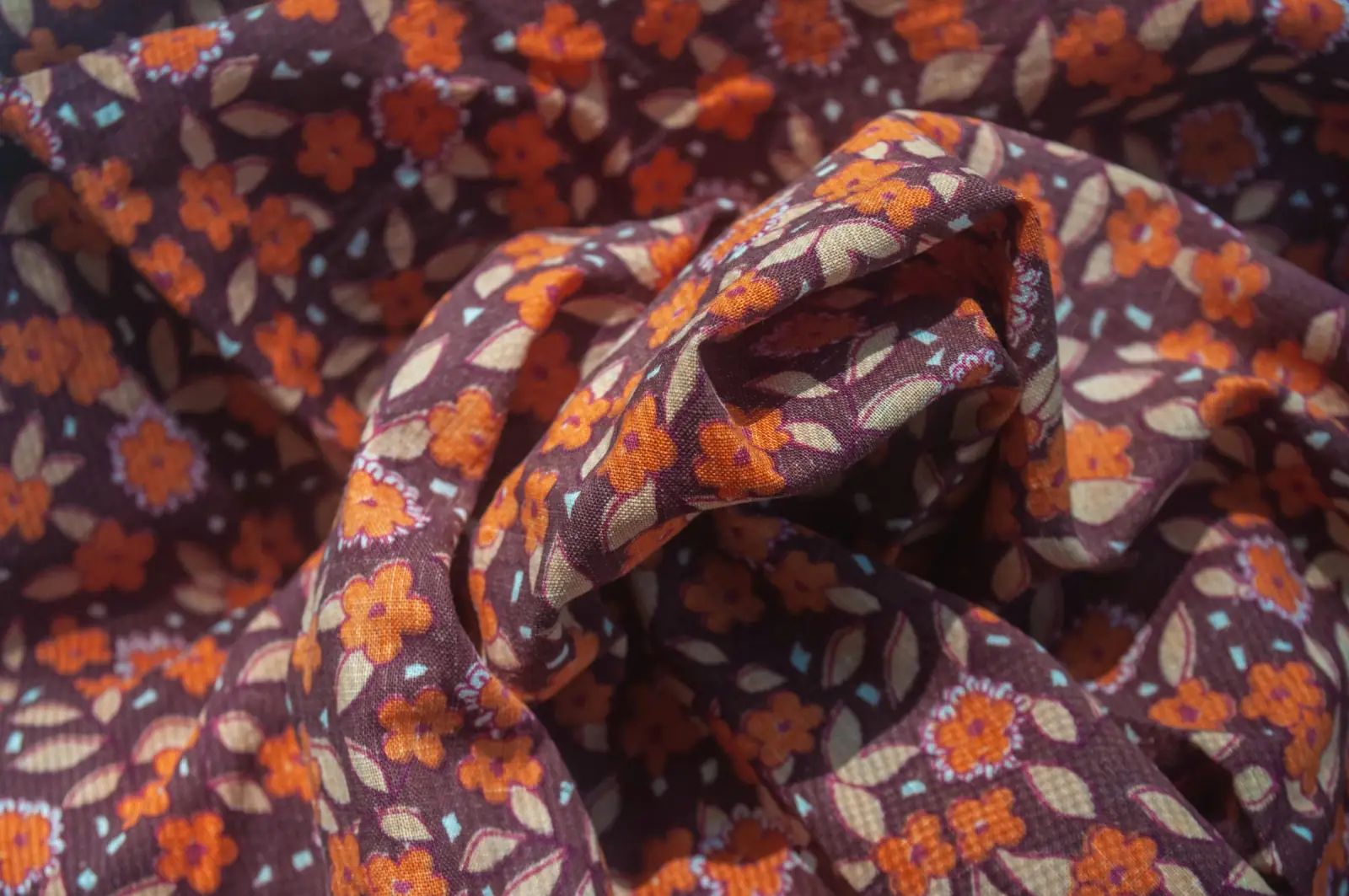
Valentine fabric: how fabric stores can manage seasonal stock
Valentine’s season lasts about a fortnight, and heart prints stop selling the morning after. Here is how a fabric store can sell into it profitably — mostly from stock it already carries — without ending February with a shelf of hearts.

Photo: Cristina Pop on Unsplash
Every February, a certain kind of customer walks into fabric shops across India. A college student wants red fabric for “Red Day” in Valentine’s week. A young couple wants matching kurtas. A home baker wants heart-print cotton for her stall. A crafter wants pink felt and red satin for gift boxes. A boutique owner wants a small Valentine collection she can post online by the fifth. They all want it now, and none of them will want it on the fifteenth.
That is the whole challenge of Valentine fabric. The season is short and sharp, the demand is real, and the stock that fits it most obviously — heart prints, “love” motifs — is almost worthless the morning after. This guide explains who buys Valentine fabric, which fabrics actually sell, how much to stock, how to plan the fortnight, and how to clear what is left before it turns into dead stock.
Who buys Valentine fabric in India
Valentine’s Day is newer in Indian retail than Diwali or Eid, and it is concentrated in cities and among younger customers. It also sits inside the winter wedding season and close to Basant Panchami, so February is busy for other reasons too. Knowing who is buying for Valentine’s specifically helps you avoid stocking for customers who won’t come.
| Buyer | What they want | How much |
|---|---|---|
| College students | Red, pink or theme fabric for Valentine’s week and college days | Small cuts, low budgets |
| Couples | Matching or coordinating fabric for outfits and photoshoots | Two lengths, often premium |
| Boutiques and small brands | A capsule collection in red, pink and hearts | Several designs, moderate lengths |
| Home bakers, cafés and event decorators | Table covers, bunting, backdrops | Longer lengths of cheap fabric |
| Crafters and gift makers | Felt, satin, net and heart prints for gifts and wrapping | Small pieces, many colours |
| Couples getting married | Red for weddings that happen to fall in February | Not Valentine buyers at all — but they share the shelf |
The last row matters. February is a heavy wedding month in much of India, and bridal red, pink and maroon sell regardless of Valentine’s Day. If your red section is busy in February, check whether it is Valentine demand or wedding demand before you plan next year’s buy around it.

What counts as Valentine fabric
Customers searching for Valentine fabric usually mean one of three things. They have very different risks for a shop.
Evergreen colours: red, pink, maroon and white
Solids and simple textures in Valentine colours: red cotton, pink rayon, maroon velvet, white satin. These are the heart of Valentine sales, and the good news is that you almost certainly stock them already. They sell for weddings, festivals and everyday wear the rest of the year, so any leftover is not a problem.

Romantic prints: roses, florals and polka dots
Rose prints, soft florals and red-and-white polka dots feel right for Valentine’s but aren’t tied to it. They sell through spring and summer. Our guide to floral cotton fabric covers how to buy and manage them.
Theme prints: hearts, lips and “love” motifs
Heart prints, cupids, lips and printed words. These are what most people picture when they say Valentine fabric, and they are where shops lose money. Demand peaks in the first two weeks of February and then almost disappears. Small heart prints have a second life in children’s wear and crafts, but large, obviously Valentine designs do not.

How much Valentine stock to buy
There is no universal number, but there is a sensible way to size the buy. Start from what you sold last February, split it into evergreen and theme stock, and treat the two very differently.
- Look up last February. On the Kapda Stock Reports hub, choose a custom range from 1 to 14 February last year and look at the top products table. Export it to Excel to plan from.
- Compare with the same fortnight in January. If red and pink solids sold about the same in both, February demand was mostly weddings. If they jumped, Valentine’s is real for your shop.
- Check what theme prints did. How much sold in the fortnight, and how much was still on the shelf in March?
- Top up the evergreens to normal levels plus a margin. Leftover red and pink sells anyway.
- Buy theme prints shallow. A few designs, short lengths, sized to what you are confident will sell by the tenth, not the fourteenth.
A worked example makes it concrete. Say last February your shop sold 60 metres of heart prints across six designs, and 25 metres were still on the shelf in March, spread over four of them. Two designs sold out early; four did not. This year, a sensible buy might be around 50 metres across three or four designs, weighted towards the two styles that sold out, with no reorder planned after the first week of February. The evergreen reds and pinks get their usual top-up, because whatever is left will sell at Holi, at weddings and all summer.
The same budgeting approach works for every short season. Our guide to planning fall fabric sets out an open-to-buy budget step by step; for Valentine’s, the season is simply two weeks long instead of three months.
A Valentine calendar for a fabric store
| When | What to do |
|---|---|
| First week of January | Review last February’s sales. Order theme prints and any extra satin, velvet, net and felt. |
| Mid-January | Receive stock, add new designs, print labels. Set up the Valentine coupon code with start and end dates. |
| Late January | Build the display near the entrance. Prepare pre-cut kits and gift bundles. |
| 1–10 February | Peak for boutiques, crafters and college events. Reorder only evergreen colours if they run low. |
| 10–14 February | Last-minute buyers. Offer ready kits. Stop reordering anything themed. |
| 15 February | Take the display down. Move theme prints to clearance or kidswear and crafts. |
The single most useful habit on that calendar is the order date. Theme prints ordered in the first week of February arrive too late to sell. If a supplier needs three weeks, the order goes in during the first week of January.
Setting up Valentine stock so you can learn from it
Most shops can’t say how their Valentine season went, because Valentine stock disappears into the general red and pink range. A little set-up in January fixes that for next year.
- Give theme prints their own category. A category such as Seasonal — Valentine in Categories lets you see exactly what that stock earned and what it cost.
- Set up each theme design as its own item, with a clear SKU such as VAL-HRT-SML-RED, so you can see which designs sold and which did not.
- Use pre-cut kits for crafters and gift buyers, sold as SET or PCS items at a fixed price.
- Print labels for every new bolt. Barcode labels show the name, SKU and price per metre, and scan straight into the bill on a busy afternoon.
- Set minimum stock levels on the evergreen reds and pinks, so the 9:00 AM low-stock alert warns you before a colour runs out mid-season.
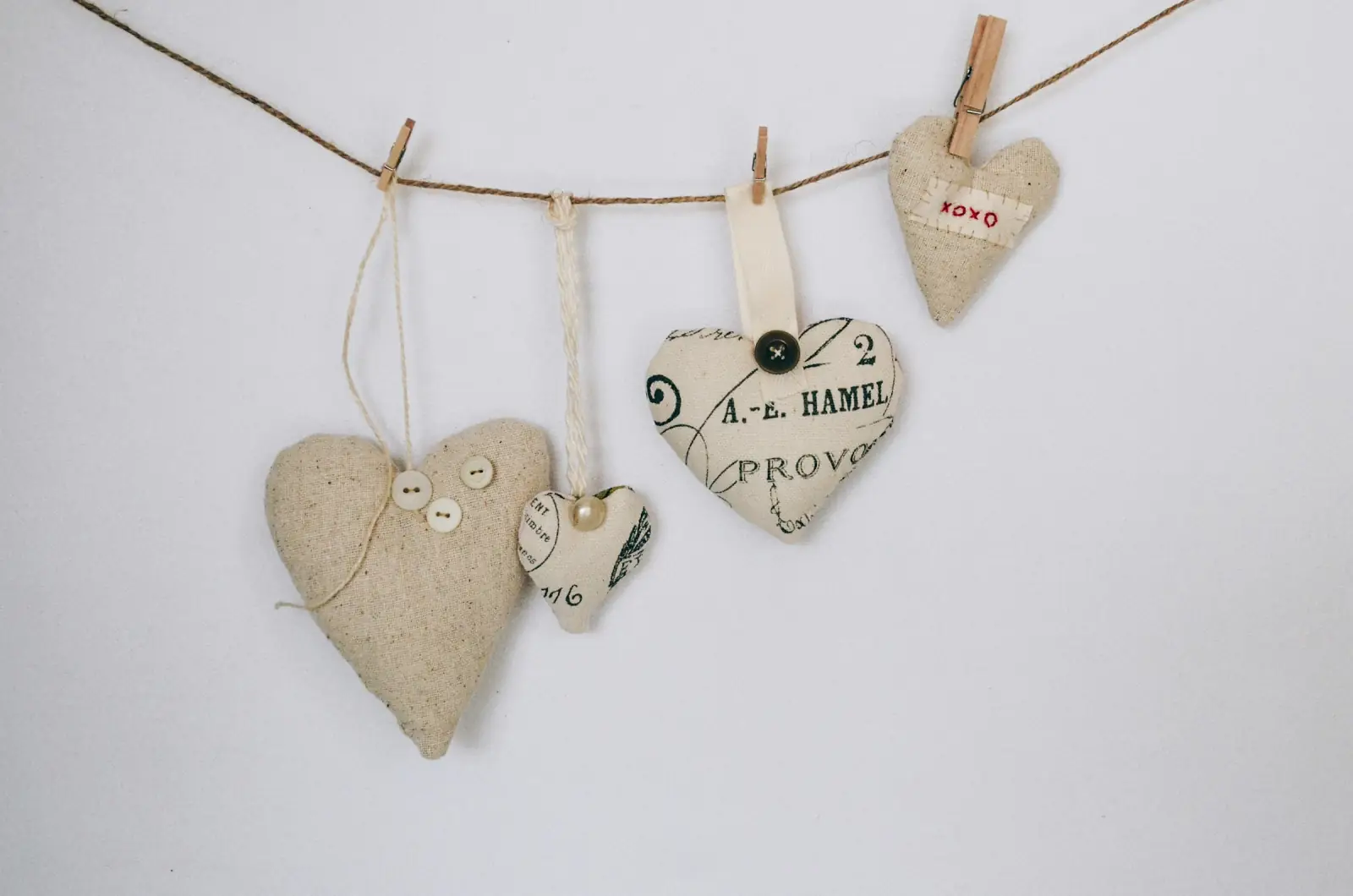
Ready-made kits that sell in February
Valentine buyers are often in a hurry and not always confident sewers. A ready kit takes the hardest decision off them, sells at a better margin than loose fabric, and uses up short ends you would otherwise discount.
| Kit | What goes in it | Who buys it |
|---|---|---|
| Couple’s coordinates | Two matching or complementary lengths, for example a red kurta length with a white or gold dupatta | Couples, families planning photos |
| Gift-wrap bundle | Squares of red satin, pink net and ribbon | Gift shops, home bakers, anyone wrapping presents |
| Heart craft pack | Small pieces of heart print, felt and plain red | Crafters, schools, parents |
| Cushion cover kit | A floral or heart-print front and a plain back, pre-cut to size | Home sewers, gift makers |
| Table and décor set | A table-cover length and bunting fabric in red and white | Cafés, event decorators |
Set up each kit as its own SET or PCS item at a fixed price, so it scans straight into the bill and its sales show up separately in your reports. Make a small batch first. Kits that sell out by the fifth are worth making again; kits still on the counter on the twelfth tell you what to skip next year.
Promotions that fit a two-week season
Valentine’s customers respond to offers, but a discount you forget to switch off is expensive. Kapda Stock’s Offers & promotions let you set a coupon code with firm dates.
- Set start and end dates. A code created in January with a start date of 1 February shows as Scheduled until then and stops working once the end date has passed, without anyone remembering to turn it off.
- Use a minimum bill. “10% off on ₹1,500 or more” lifts the average bill instead of just discounting small ones.
- Cap the discount. A maximum discount keeps a percentage offer from becoming expensive on a large bridal bill that happens to fall in the same week.
- Set a usage limit if the offer is a promotion for the first few customers, such as a couples offer for the first 50 bills.
- Give every offer a code. Offers are applied at the counter by typing the code; one without a code can’t be used on a bill.
The Bill size analysis shows how your bills spread across value bands, which helps you set the minimum bill just above where most of your February bills usually land.
Displays that sell a two-week season
A short season depends on customers noticing it straight away. The display does most of the work.
- Put it up in the last week of January, not on the first of February. Boutiques and crafters plan ahead.
- Build it from evergreen colours first. A wall of reds and pinks, with a few heart prints at eye level, sells more than a wall of hearts.
- Show one or two finished pieces. A stitched cushion cover or a simple kurta in a Valentine colour helps customers picture the result.
- Put the ready kits within reach of the counter, with clear prices.
- Take it all down on the fifteenth. A Valentine display still up in March makes the whole shop look out of date.
Making the most of the fortnight at the counter
- Put the display at the front. Valentine buyers are often in a hurry and won’t hunt for it.
- Offer ready kits. A couple’s coordinating lengths, a gift-wrapping bundle of satin, net and ribbon, or a heart-print craft pack make fast, easy sales.
- Suggest the matching piece. A customer buying red for a kurta may want a white or gold dupatta. A crafter buying felt may need satin.
- Staff for the rush. Sales by time shows your peak hours and busiest weekdays. Look at it for the weeks before Valentine’s and make sure your best salespeople are on the floor then.
- Know your wedding customers. A bride’s family buying red in February is not a Valentine customer and shouldn’t be offered a heart print.
The morning after: clearing what is left
On 15 February, the display comes down and every piece of Valentine stock needs a decision.
| Leftover | Decision |
|---|---|
| Red, pink and maroon solids, satin, velvet | Move back into the main range. They will sell for weddings and festivals. |
| Rose prints, soft florals, polka dots | Move into the spring floral range. |
| Small heart prints | Move to kidswear and crafts, or bundle as craft packs. |
| Large, obvious Valentine prints | Clear now with a time-limited code, or hold for next year only if you have the space. |
| Pre-cut kits | Unbundle into remnants, or discount as craft packs. |
Kapda Stock’s dead-stock list on the Reports hub flags items with stock and no sale in 90 days, with a suggested discount. For Valentine theme prints, 90 days is too long to wait; by May they are simply old stock. Decide in February, not in May.
Review the season while you remember it
- How did the Valentine category do? Category performance for this month shows revenue, cost and margin by category, including your seasonal one.
- Which theme designs sold? Export the top products for 1–14 February from the Reports hub and keep it with next year’s plan.
- How much was left? Inventory valuation shows the value of what remains in each category at cost.
- Write down what happened. A supplier that delivered late, a design that sold out on the fifth, a promotion that didn’t work. A two-line note in February saves guesswork next January.

The same playbook works for every short season
Valentine’s is only one of several short, themed seasons a fabric shop can sell into. The same approach — sell mostly from evergreen stock, keep theme stock small, order early, run a dated offer and clear on time — works for all of them.
- Republic Day and Independence Day: saffron, white and green fabric for school programmes and events, bought in a rush in the week before.
- Holi: white kurta fabric and cheap white cotton for clothes that will be ruined anyway.
- Raksha Bandhan: ribbons, satin and small festive pieces for rakhi and gift wrapping.
- Christmas: red, green, white and gold fabric for décor and gifts, especially in cities, Goa, Kerala and the north-east.
- School reopening: uniform checks, shirting and suiting in bulk, with a clear delivery deadline.
None of these needs a big budget. Each needs a date in the diary, a small order placed early, and a decision on the day after about what is left.
A short season, run on purpose
Valentine fabric is a small season, and it should stay small in your buying. Most of the money comes from reds, pinks, satins and florals you would sell anyway; theme prints are a garnish. Order early, give the season its own category, set offers with firm dates, and make the clearance decision on the fifteenth.
Kapda Stock helps you run every short season this way: custom-range reports to see what sold last year, seasonal categories, scheduled coupon codes, barcode labels, low-stock alerts and inventory valuation. For the bigger festive calendar, see Surviving the festive rush. When you are ready, see the full feature list or set up your shop in time for next February.
Frequently asked questions
What fabrics are used for Valentine’s Day projects?
Red, pink, maroon and white solids in cotton, rayon, satin and velvet are the most popular, along with rose prints, soft florals, polka dots and heart prints. Crafters also buy felt, net, organza and satin for gift wrapping, fabric roses and decorations.
When should a fabric store order Valentine fabric?
In the first week of January, so it arrives, is labelled and on display by the end of the month. Stock ordered in February usually arrives too late, because demand peaks in the first ten days of February and collapses after the fourteenth.
How much heart-print fabric should I stock?
Keep it small: a few designs in short lengths, sized to what you are confident will sell by around the tenth of February. Most Valentine sales come from red and pink colours you stock anyway, which sell the rest of the year; theme prints are much harder to sell after the season.
What should I do with leftover Valentine fabric?
Move red, pink and satin back into the main range, shift rose prints and polka dots into the spring floral range, and move small heart prints to kidswear or craft bundles. Clear large, obvious Valentine prints straight after the fourteenth with a time-limited offer.
How can I run a Valentine offer without it running too long?
Create a coupon code with a start date and an end date. In Kapda Stock, a code with a future start date shows as Scheduled until it begins and stops working once its end date has passed, and you can add a minimum bill, a maximum discount and a usage limit. See Offers & promotions.
Is Valentine fabric worth stocking for a small fabric shop?
Usually yes, as long as the buy is small. A small shop can sell into Valentine’s mostly from red, pink and satin stock it already carries, add a few heart prints and ready kits, and avoid large theme-print orders that are hard to sell after 14 February.
See it working in your own shop
Set up a workspace in under a minute, or read the step-by-step guides in the docs.